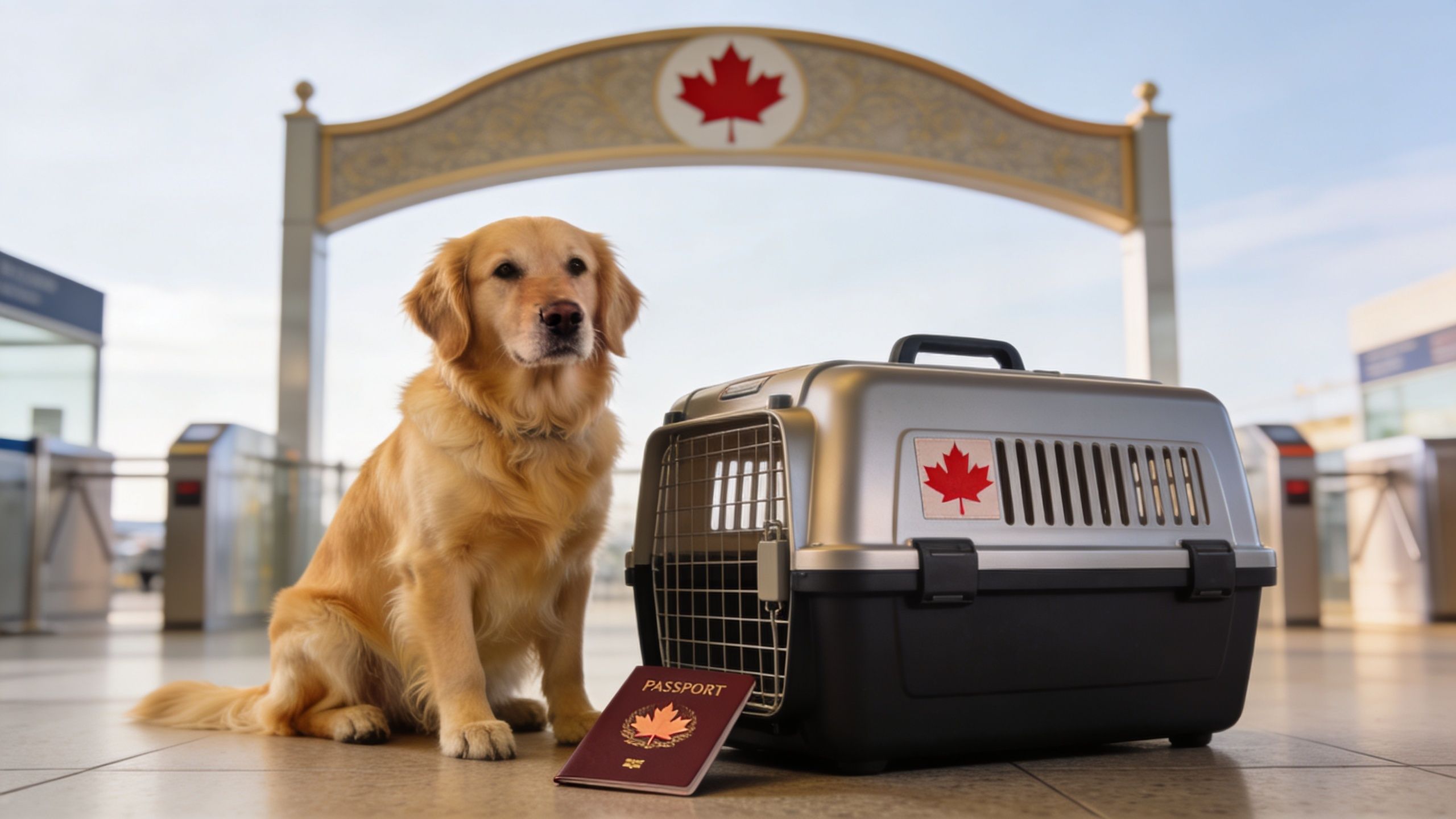
You're probably here because the trip is booked, the crate is picked, and then someone casually mentions CFIA paperwork. That's the moment pet travel stops feeling cute and starts feeling like customs.
The good news is that cfia pet travel is manageable when you treat it like a compliance job, not a last-minute errand. The bad news is that border officers and regulators won't grade on effort. If a document is wrong, late, or incomplete, your pet can be delayed or refused entry.
That's where first-time importers usually get stuck. They assume pet travel works like passenger travel. It doesn't. Pets move under animal health rules, and those rules care about timing, documentation, routing, and, in some cases, what country your pet passed through on the way.
Your Pet Travel Plan Starts Here
Many travelers only realize the strictness of this process when imagining a worst-case scenario upon arrival. You have landed after a long trip, your pet is stressed, you are tired, and an official at the border is calmly explaining that your paperwork is invalid. That is a difficult way to learn that pet travel is a compliance exercise with fur.
The CFIA sits at the centre of that process in Canada. Its travel guidance makes two things very clear. First, pet owners need to review requirements well in advance because some steps must be completed at specific times. Second, if those steps aren't done correctly or on time, a pet may be refused entry, as set out in the CFIA travelling with pets guidance.
Start with the trip, not the documents
The smartest way to prepare is to map the trip in order:
- Identify the animal and route. Species matters. So does whether you're entering Canada, leaving Canada, or transiting through another country.
- Confirm the document path. Some trips need only standard health and vaccination records. Others need CFIA-endorsed paperwork before departure.
- Check timing rules early. Vet appointments, endorsements, airline booking rules, and border entry windows don't always line up neatly.
- Stress-test the file. Names, dates, chip details, and destination details should match across every document.
A practical comfort item helps too. If you're still sorting your packing list, these premium travel bags for dogs can help organise food, leads, records, and the small things that always vanish when you need them most.
Practical rule: Build your pet file before you build your travel day. Border problems usually start weeks earlier, not at the airport.
If you want a broader look at cross-border planning before tackling the animal-specific rules, the customs resources at J.W. Smith guides are a useful place to start.
Defining Your Pet Travel Category
A lot of pet travel problems start with a bad label on the file.
Before you pay for a flight, a crate, or a vet certificate, decide what the animal is in regulatory terms and what the trip is for. CFIA does not treat every animal moved by an owner as a standard pet case. In practice, that single mistake can send you down the wrong paperwork path and cost you a missed departure or a border hold.
For CFIA purposes, the usual household pet lane is narrower than many first-time importers expect. Dogs, cats, and ferrets are generally handled as pets. Other animals often fall into separate rule sets, even if they live in the home and travel with the family. Rabbits, birds, reptiles, and exotic species need their own requirement check. The same caution applies to equine movements. If your plans involve horses rather than household pets, you can browse horses on Creatures for general species context, then verify the actual import or export conditions with the relevant authorities.
What category are you actually filing under
Species is only the first filter. Purpose matters too.
A dog travelling with its owner for a permanent move is one type of file. A puppy sent to a buyer, a rescue transfer, or breeding stock moving between parties is another. People often assume hand-carrying an animal makes the trip personal. It does not. If money changes hands, ownership changes, or the movement supports a business activity, officers may treat it as commercial.
That distinction affects more than forms. It can change the documents required, the inspection risk, the way the carrier books the shipment, and whether you should get a broker involved before travel day.
Pet import categories at a glance
| Category | Primary Purpose | What usually matters most | Broker Recommended? |
|---|---|---|---|
| Personal travel | Owner travelling with a household pet | Records must match the animal, the owner, and the route | Sometimes |
| Commercial movement | Sale, breeding, transfer, rescue, or business shipment | Shipment details, consignee information, and document timing need tighter control | Usually |
| Assistance animal | Animal travelling in support of a handler | Travel accommodations may differ, but animal health entry rules still need to be met | Sometimes |
Where first-time importers get this wrong
The common error is not missing a form. It is choosing the wrong category and building the whole file on that assumption.
I see two problems repeatedly:
- A commercial movement is described as personal because the animal is travelling with a person rather than as manifest cargo.
- A non-traditional pet is prepared under dog or cat guidance, then the owner learns too late that a different permit, certificate, or agency review applies.
Both errors are expensive because they usually surface late. Often the airline catches them at check-in, or the border officer catches them when the animal has already arrived.
A practical way to classify the trip
Ask four direct questions before you book:
- What species is travelling? Start there, because species determines which rule set applies.
- Who owns the animal now, and who will own it after arrival? A change in ownership can shift the movement into a commercial category.
- Why is the animal moving? Family relocation, sale, breeding, rescue, competition, and service work do not all get handled the same way.
- How is the animal travelling? Accompanied baggage, cargo, and third-party handling can trigger different document and coordination issues.
If you cannot answer all four cleanly, stop and sort it out before the appointment cycle begins. That is usually the point where broker advice saves money. It is far cheaper to classify the file correctly at the start than to fix a rejected shipment after carrier fees and veterinary costs have already been paid.
The correct category sets the entire file. Get that decision right early, and the rest of the CFIA process becomes much easier to control.
Your Pet's Passport to Canada
A pet doesn't carry a passport, but the paperwork serves the same purpose. If it's incomplete, inconsistent, or unreadable, the trip can stall fast.
For first-time importers, the safest habit is to think in layers. One layer proves identity. Another supports health status. A third proves the documents were issued by the right professional at the right time. Border review gets difficult when one of those layers is missing.
What your document file should do
Your file should answer basic questions without forcing an officer to guess:
- Who is the animal. The records should clearly identify the pet.
- Who is responsible. Owner and shipment details should be consistent.
- Is the paperwork current and credible. Documents should be signed where required and prepared by the proper veterinary professional.
- Does the trip match the paperwork. Routing, destination, and travel purpose should make sense together.
That sounds simple, but most delays come from tiny mismatches. A nickname on one record and a full registered name on another. A chip number copied incorrectly. A destination country listed one way on the health paperwork and another way in the booking file.
Rabies and health records need a hard review
For many pet movements, rabies and veterinary health paperwork do the heavy lifting. The exact requirements depend on the route and country involved, so don't treat an old certificate as reusable just because the pet itself hasn't changed.
I tell clients to review these records the same way a broker reviews a commercial invoice:
- Check names exactly. Owner name and pet identification should align across every document.
- Review dates with suspicion. If a document depends on timing, assume nothing and confirm everything.
- Match species and description. Breed, sex, age, colour, and other identifiers should be consistent.
- Confirm legibility. A smudged stamp or half-readable signature is not charming. It's a problem.
If a document contains a mistake, fix it before travel day. Border counters are for inspection, not editing.
If you want a non-government overview to help you build a sensible pre-travel checklist, Pet Magasin's international pet travel advice is a helpful companion resource. Use it as a planning aid, then verify the actual legal requirements through the relevant authorities for your route.
What works and what doesn't
What works is a tidy, single package with current originals or accepted copies, clear identity details, and no contradictions.
What doesn't work is showing up with a phone full of screenshots, an old vaccine record from a different clinic, and the firm belief that “they'll understand what we mean.” They might understand it. They still may not be able to accept it.
The Import and Export Process Step by Step
A pet move usually goes wrong before travel day, not at the counter. The booking gets made first, then someone discovers the certificate needs CFIA endorsement, the destination wants an import permit, or the transit stop adds a rule nobody checked.
The safest approach is to build the trip in order. Confirm the legal path first, then book around it.
Step one, confirm the route before you pay for it
Start with four facts. Species, country of origin, final destination, and every stop in between. A direct flight and a one-stop itinerary can produce different document requirements, even when the pet and owner are the same.
Airline approval is only one layer. Border admissibility is another. I have seen travellers rely on a confirmed booking as proof that the move is compliant. It is not. The carrier checks whether it will transport the animal. The government checks whether the animal can legally enter, leave, or transit.
If the route is complicated, accurately price the risk. Rebooking fees, storage charges, missed connections, and repeat veterinary appointments often cost more than getting the requirements reviewed properly at the start.
Step two, get the veterinary file prepared early enough to fix mistakes
Once the route is settled, book the veterinary appointment with enough lead time to correct anything that turns up. That may include updating identification details, checking whether the destination form must be completed in a specific format, or lining up timing-sensitive health work.
Give the clinic a written summary of the trip. Include dates, flight path, destination country, and transit countries. That reduces the chance of the vet issuing a document for the wrong movement.
This step saves more files than people expect.
Step three, complete export controls before the pet leaves Canada
For many dogs, cats, and ferrets leaving Canada, the export certificate must be issued by a licensed veterinarian and endorsed by a CFIA veterinarian before departure, as explained on the CFIA pet export page. CFIA also indicates that some destinations require an import permit and that transit countries can trigger extra certification.
That timing matters. If the pet departs before the required endorsement is in place, you may not be able to repair the file after the fact. At that point, the problem is not clerical. It can stop the trip or force costly changes on arrival.
Treat endorsement appointments like flight deadlines. Miss it, and the rest of the file may no longer work.
Step four, present a file an officer can review quickly
At arrival, the officer needs to match the animal, the travel plan, and the paperwork without sorting through contradictions. A clean file reduces questions and keeps the inspection focused on admissibility rather than reconstruction.
A workable arrival package usually includes:
- All required documents in one folder, not split across phones, email chains, and carry-on pockets
- Identity details that match throughout the file, including the booking and veterinary records
- A route that matches what was declared
- Current contact details for the veterinarian, exporter, or shipper in case the officer needs confirmation
For a broader view of how release and document review work at the border, this step-by-step guide to importing goods to Canada helps explain the customs side of the process.
If your move involves cargo handling, multiple countries, tight endorsement timing, or uncertainty about who must present documents at the border, professional help usually pays for itself. The cheapest pet move on paper often becomes the most expensive one once delays start.
Common Pitfalls That Derail Pet Travel
Most failed pet moves don't collapse because of one dramatic mistake. They fail because several small assumptions pile up at once. A wrong chip standard. An outdated form. An airline agent saying one thing while the regulator expects another.
That's why I tell clients to fear the “should be fine” file. Those are the dangerous ones.

The paperwork that almost works
A common scenario is the owner who has every document, but one of them isn't usable. The certificate is signed, but the identifying details don't match the booking. Or the health paperwork is fine, but the animal's microchip information is wrong in one place.
That kind of file creates delays because nobody at the border wants to guess which version is correct. “Almost right” is still wrong when the record has to support admissibility.
The rule change nobody checked
Another problem is relying on last year's process. Pet travel rules can change, and recent Canada-U.S. dog travel is a good example. The Canadian Veterinary Medical Association summary of CFIA guidance states that, as of August 1, 2024, dogs entering the United States must meet new requirements. It notes that all dogs entering the U.S. must be at least 6 months old, have an ISO-compliant microchip, appear healthy on arrival, and present a CDC Dog Import Form receipt, with additional documentation depending on travel history and rabies status, as outlined in the CVMA update on dogs travelling to the U.S..
That's exactly why old blog posts, old breeder advice, and old screenshots can get people into trouble.
The border doesn't care what the rule was when you started planning. It cares what the rule is on travel day.
Three traps that catch good-faith travellers
- Microchip mismatch. If the route requires an ISO-compliant chip and the animal doesn't meet that standard, the problem won't solve itself at check-in.
- Airline and CFIA rules treated as interchangeable. They're not. You need both sets to work together.
- Transit ignored. A stop in another country can create a second compliance layer you never planned for.
The travellers who get through smoothly are rarely lucky. They checked the live requirements, confirmed the route, and reviewed the file like someone paid them to be suspicious.
When a Customs Broker Is Your Pet's Best Friend
For a straightforward personal trip with one household pet, many owners can handle the process themselves if they're organised. The moment the trip becomes commercial, time-sensitive, multi-party, or cross-border in more than one direction, DIY starts getting expensive.
That's where a customs broker earns their keep. Not by making the rules disappear, but by keeping the shipment aligned with them.

When professional help makes sense
A broker is a smart move when any of these apply:
- Commercial movement. Breeders, rescues, retailers, and organised transfers usually have more documentation risk.
- Tight timing. If flights, endorsements, and delivery commitments all have to align, mistakes get costly quickly.
- Border uncertainty. If you're not clear on who handles what between carrier, CFIA, and CBSA, get help before the pet moves.
- Business importer setup. If the shipment ties into broader customs obligations, the admin side can be as important as the animal health side.
A broker can also help when things have already gone sideways. If a file has inconsistencies, a shipment is arriving with incomplete information, or a commercial importer hasn't set up the customs side properly, it's far better to get support before the pet is sitting in a crate waiting for answers.
What a broker actually does
The practical value is coordination. A broker helps line up the customs side with the regulatory side, flags avoidable document issues, and keeps the import or export from drifting into “we'll sort it out at the border” territory.
If you're unsure whether your shipment belongs in that category, this plain-language explainer on what a customs broker does is worth reading. Firms such as J.W. Smith Customs Brokers Ltd. handle Canadian customs clearance and can be part of the import side of shipments where CFIA-related pet documents also need to be managed correctly.
CFIA Pet Travel Resources and Final Checklist
When in doubt, go back to the official tools. Pet travel gets messy when people build plans from memory, forum posts, or advice from someone whose trip happened on a different route under different rules.
Use the CFIA resources that match the actual movement:
- Travelling with your pet for core Canadian pet travel guidance
- Pet export requirements when the animal is leaving Canada and may need CFIA endorsement
- AIRS when you need to check import requirements in a more structured way
- CFIA office information when endorsement or direct confirmation is needed
Final checklist before travel day
- Confirm the category. Make sure your animal and travel purpose fit the right CFIA path.
- Review the full route. Destination and transit requirements can both matter.
- Audit the paperwork. Names, dates, chip details, and country information should match exactly.
- Book early where timing matters. Vet visits and endorsements don't belong on a last-minute to-do list.
- Check the carrier separately. Airline rules are a second gatekeeper.
- Get help if the move is commercial or complicated. It's cheaper than fixing a border refusal after the fact.
A smooth pet move usually comes down to one unglamorous skill. Preparation. Not the fun answer, but very often the one that gets tails across the border without drama.
If your pet shipment involves commercial import or export, tight timelines, or paperwork that needs a second set of expert eyes, J.W. Smith Customs Brokers Ltd. can help you manage the Canadian customs side before a small document issue becomes a very large travel problem.
Need Help with Customs?
J.W. Smith Customs Brokers has over 50 years of experience helping Canadian businesses navigate imports with confidence. Our team of licensed customs brokers is ready to assist with your import and export needs.