If you're importing goods, think of Canada’s Consumer Packaging and Labelling Act (CPLA) as the official 'dress code' for your products. A simple label mistake can turn a profitable shipment into a customs nightmare, complete with seized goods, hefty fines, and a logistical headache you didn't plan for. Getting this right isn't just about following rules—it's about protecting your bottom line.
What is the Consumer Packaging and Labelling Act?
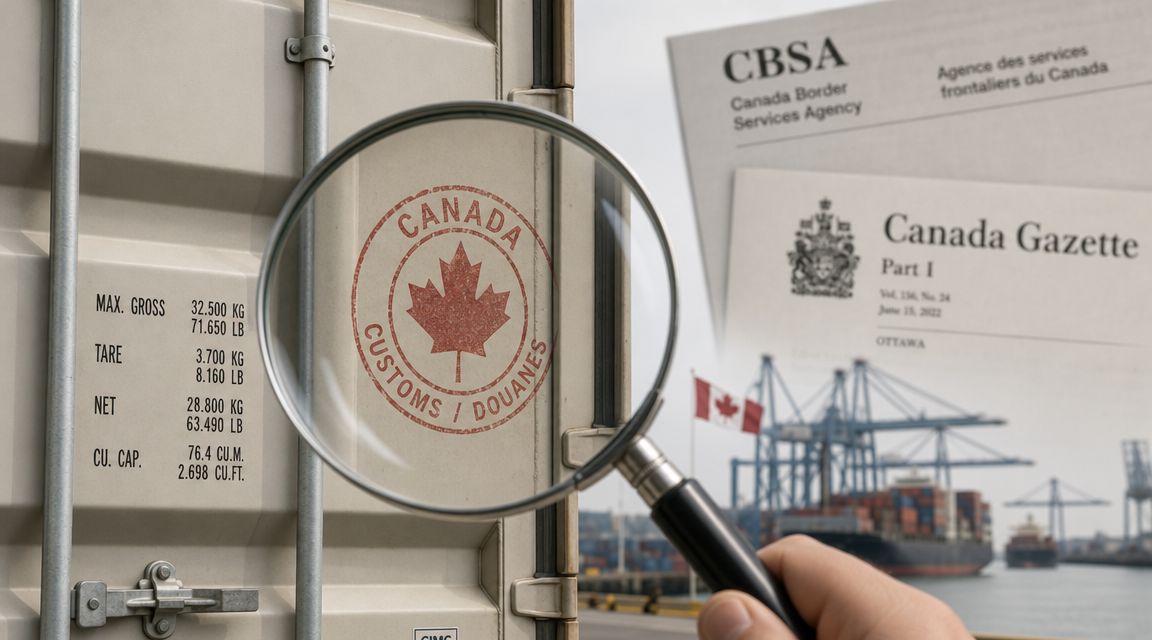
The CPLA is a set of strict rules ensuring Canadian consumers get accurate and clear information on prepackaged goods. A product that fails to meet these standards is basically showing up to the party in sweatpants—and the Canada Border Services Agency (CBSA) is the unforgiving bouncer at the door.
At its core, the Act covers nearly all prepackaged goods sold to consumers, from toys and electronics to clothing and household cleaners. The goal is to prevent deceptive marketing and help people make informed choices. For you, the importer, this means the buck stops with you. It’s your job to guarantee every item is compliant before it even thinks about crossing the border.
The purpose of the Consumer Packaging and Labelling Act isn't to create red tape; it's to build trust. When a consumer can see what a product is, how much is inside, and who stands behind it, it creates a fair market for everyone.
The Big Three of CPLA Compliance
While the full Act can seem complex, most compliance issues boil down to three non-negotiable elements on your label. As any experienced customs broker will tell you, getting these right is 90% of the battle for a smooth customs clearance.
Here’s a no-fluff breakdown of what every label must have to avoid trouble.
Quick Guide to CPLA Core Requirements
| Label Element | What It Is | Why It Matters for Importers |
|---|---|---|
| Product Identity | The common or generic name of the product. | Must be in both English and French. A missing translation is one of the fastest ways to get a shipment flagged by CBSA. |
| Net Quantity | The amount of product in the package. | Must be in metric units (e.g., grams, millilitres) and be bilingual. Imperial units are optional but not a substitute. |
| Dealer Information | The name and address of the responsible party. | This must be the Canadian dealer or importer, not the foreign manufacturer. It tells authorities who is accountable in Canada. |
Getting these three pillars right is fundamental. They are the first things a CBSA officer or Competition Bureau inspector will look for. A small oversight—like forgetting the French word for "shampoo" or listing the U.S. head office—can get your entire shipment pulled for inspection, causing delays and racking up unexpected costs.
Keep in mind, some goods have their own specific rules on top of the CPLA. For instance, textiles have unique labelling requirements. You can learn more in our guide to Canadian border rules for textiles and apparel imports.
The Three Pillars of CPLA Label Compliance

If you think of import regulations as a rulebook, this is the chapter you absolutely cannot skip. These three core requirements will either get your products onto store shelves or stuck in a customs warehouse. Think of it as a quick pre-shipment audit. A few minutes of review at the factory can save you weeks of headaches and thousands of dollars down the line.
Pillar 1: Product Identity Declaration
This is simply what the product is, stated in its common name. It must be clearly displayed on the main part of the package—the principal display panel—in both English and French.
This sounds straightforward, but it's a frequent tripwire. Creative marketing slogans don't count. Labelling your product "Morning Zest" isn’t enough if it's a bottle of orange juice. The label must explicitly state "Orange Juice / Jus d'orange".
Actionable Tip: Kill any ambiguity. If it’s a hammer, the label must say "Hammer / Marteau". CBSA officers won’t guess, and a vague label is an open invitation for a much closer inspection. Misleading environmental claims are also a red flag; be precise with terms like compostable vs. biodegradable labels.
Pillar 2: Net Quantity Declaration
This tells the consumer exactly how much product is inside the package. Precision is everything.
This declaration has to be:
- In metric units (like grams, millilitres, or metres).
- Located on the main display panel.
- Shown in both English and French (e.g., "500 g / 500 g" or "750 mL / 750 ml").
A common slip-up is forgetting the bilingual format. Simply putting "500 g" is incomplete and will get your shipment flagged. The repetition might look odd, but it's a firm requirement.
Pillar 3: Dealer and Importer Information
The final pillar is identifying the dealer—the company taking responsibility for the product in Canada. This means the label must show the name and address of the Canadian manufacturer, importer, or retailer. This is a huge point of confusion for new importers.
You cannot list your overseas factory's address. The label must point to a Canadian entity that can be held accountable. The rules for this have been in place since the Act was passed in 1970 and are enforced by the Competition Bureau. To stay ahead, learn more about how Canada regulates consumer packaging.
Navigating Bilingual Labelling Without Errors
This is where so many importers get tripped up, and it’s a detail that can bring your entire supply chain to a halt. Think of compliant bilingual labelling as your product's passport to enter Canada. If it's missing, your goods are effectively undocumented and will almost certainly be detained.
The Consumer Packaging and Labelling Act is crystal clear: all mandatory information must appear in both English and French. This isn't a suggestion; it's a non-negotiable rule. A monolingual U.S. label is one of the most common—and entirely avoidable—reasons for a customs nightmare.
The Bilingual Basics Every Importer Must Know
The requirement applies to the product identity and the net quantity. A simple bar of soap, for example, must declare "Soap / Savon" and show its net quantity as "100 g / 100 g".
Where you put this information is just as critical. All mandatory bilingual text has to be on the Principal Display Panel (PDP)—the main face of the package. You can't just tuck the French translation away on the back panel and hope no one notices.
A monolingual U.S. label is not "good enough for Canada." This assumption is a recipe for customs detention. Failing to provide a bilingual label is like showing up at the airport with an expired passport—you're not getting in.
The Quebec Nuance
While the CPLA sets the federal baseline, you also have to account for Quebec. The province's Charter of the French Language generally requires all information on a product's packaging to be in French, not just the federally mandated bits. The French text must also be at least as prominent as any other language. This often requires more than a direct translation; it demands localization. You can find valuable resources on accurately translating French for Canadian audiences.
The safest and most efficient strategy is to design fully bilingual packaging from day one. This makes your product compliant across all of Canada and saves you from the headache of managing separate inventory for Quebec.
Compliant Vs Non-Compliant Examples
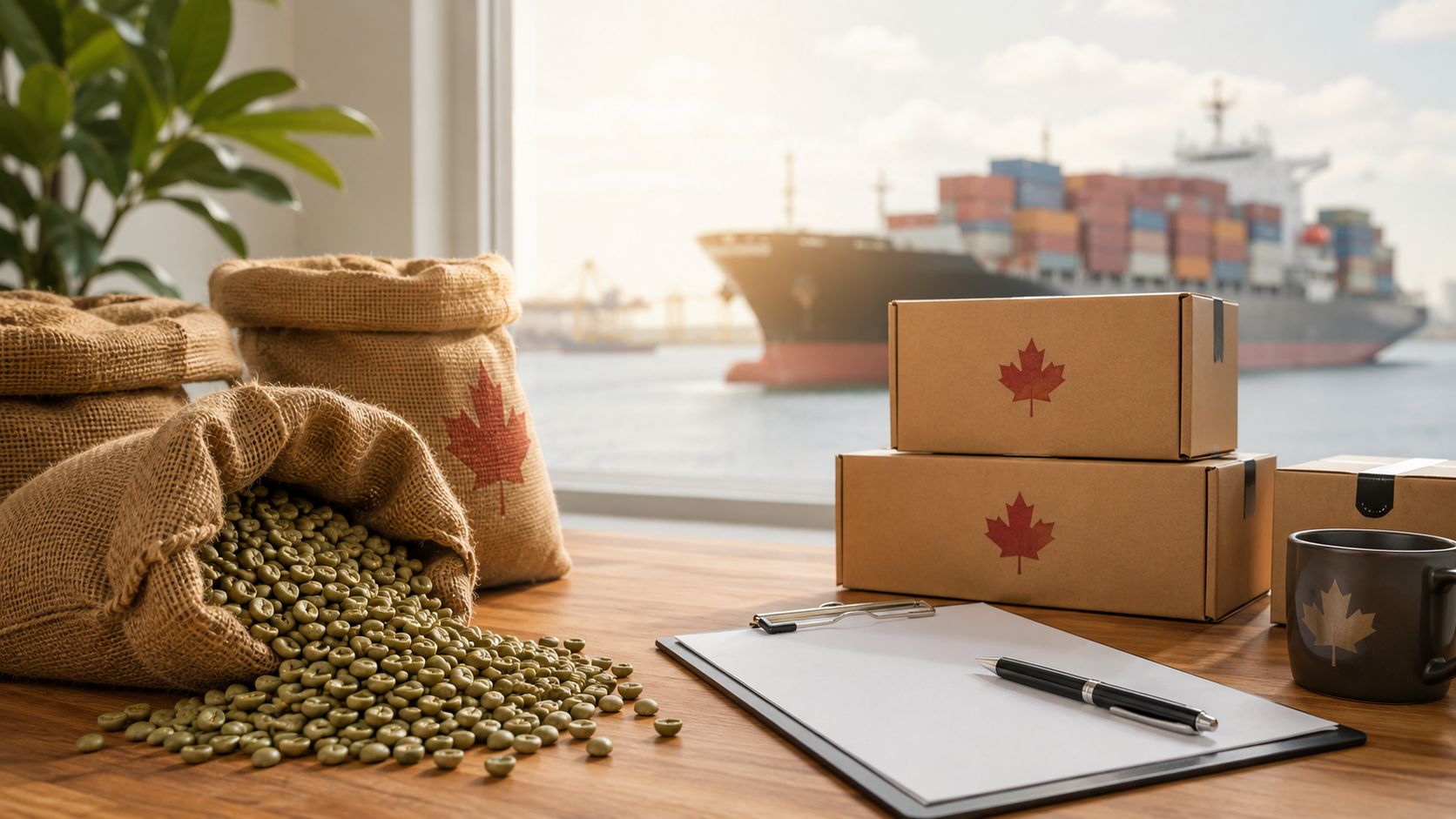
Let's make this real with a jar of coffee beans.
Non-Compliant Label (Risk of Detention):
- Identity: Coffee Beans
- Net Quantity: 340g
- Why it fails: English only. This is a red flag for customs.
Compliant Label (Smooth Clearance):
- Identity: Coffee Beans / Grains de café
- Net Quantity: 340 g / 340 g
- Why it succeeds: All mandatory info is bilingual on the main panel.
It might seem like a minor point, but for a customs officer, it’s a black-and-white issue. Food products face intense scrutiny and must also comply with the Safe Food for Canadians Regulations. Getting bilingual labelling right is one of the most effective things you can do to keep your products moving.
Common Exemptions and When They Apply to You
Just when you think you’ve got the Consumer Packaging and Labelling Act figured out, you discover the exceptions. Knowing these exemptions can feel like finding a secret express lane at the border. But, and this is a big but, misinterpreting an exemption is a surefire way to land your shipment in customs purgatory.
These aren't loopholes. They are specific, conditional exemptions. Assuming your product qualifies without double-checking is a rookie move that ends in delays and penalties.
Products Not Sold To Consumers
The biggest exemption is for products not for consumer sale. This covers goods sold exclusively for industrial, commercial, or institutional use—the B2B world.
For example, a 200-litre drum of cleaning solvent sold directly to a factory is generally exempt from CPLA retail labelling. The buyer is a professional, not an everyday shopper. However, if that solvent is later repackaged into one-litre bottles for a hardware store, those bottles absolutely must be CPLA-compliant.
Actionable Tip: Your product’s end-user dictates your labelling duties. If it’s strictly B2B and will be used up long before reaching a consumer, you might be exempt. If there's any chance it could end up on a retail shelf as-is, you have to comply.
Exemptions from Bilingual Labelling
While the default is bilingual, a few narrow situations get a pass. One key exemption is for a "local product" sold only in an area where less than 10% of the population speaks the other official language. This almost never applies to importers with national distribution plans.
Another scenario involves test market products. If you're bringing in a new product for a limited time (no more than one year) to test the waters, you may be exempt, but you must notify the Competition Bureau ahead of time. Some specialty products like greeting cards and books are also exempt.
Products Governed By Other Acts
The CPLA doesn't step on other regulators' toes. Many products are technically exempt because they fall under other, often stricter, federal acts. This isn't a get-out-of-jail-free card; it just means you have a different rulebook to follow.
- Foods, Drugs, and Cosmetics: Fall under the Food and Drugs Act (FDA).
- Textile Articles: Governed by the Textile Labelling Act.
- Precious Metals: Covered by the Precious Metals Marking Act.
Navigating these exemptions requires a sharp eye for detail. Always verify the exact conditions before you finalize your packaging. One wrong assumption can have your profit margin disappear with a single customs ruling.
The High Cost of Getting It Wrong

So, what happens when your label gets it wrong? A non-compliant label under the Consumer Packaging and Labelling Act can quickly spiral into a logistical and financial nightmare. Think of the Competition Bureau and the CBSA as referees—they have the power to pull your shipment right off the field.
The Real Cost of a Label Mistake
The most immediate consequence is a shipment seizure by the CBSA. Your goods are detained, and they aren’t going anywhere until the labelling is fixed. Meanwhile, you'll be racking up storage fees, missing delivery deadlines, and damaging relationships with your customers.
Once a shipment is flagged, you’ll likely have to move it to a bonded warehouse to relabel every single unit. We worked with one importer whose simple translation error on a shipment of 10,000 items cost them over $15,000 in relabelling, storage, and transport fees. That was before a single item hit a store shelf.
Getting your labels right isn't just about compliance; it's a direct investment in your supply chain's integrity. A small oversight can easily wipe out the entire profit margin on a shipment.
Penalties That Pack a Punch
If the violation is serious or you're a repeat offender, the consequences escalate. The Competition Bureau can issue Administrative Monetary Penalties (AMPs). These aren't just a cost of doing business—they're significant fines intended to make sure you never make the same mistake twice.
For an individual, these penalties can go up to $10,000 for a first offence. For a corporation, that jumps to a staggering $100,000. In severe cases, like deliberate and deceptive labelling, the Act even allows for criminal charges.
Enforcement is No Joke
Don't think you'll fly under the radar. Last year, Canadian authorities issued over 1,000 enforcement actions for CPLA violations. A surge in enforcement shows how even minor slip-ups—like forgetting a bilingual net quantity—can trigger massive fines, with reports showing one in five businesses fail on bilingual requirements. To get a sense of how seriously authorities are taking this, you can learn more about recent enforcement findings.
On top of seizures and fines, authorities can also order a product recall. This is the ultimate nightmare scenario, forcing you to pull all non-compliant products off store shelves nationwide. The financial loss and brand damage can be devastating.
CPLA Violation Severity and Potential Consequences
| Violation Type | Example | Potential Action |
|---|---|---|
| Minor (First Offence) | Incorrect placement of the net quantity declaration. | Shipment is detained until labels are corrected at the importer's expense. |
| Moderate (Repeated) | Consistently failing to provide a full French translation. | Shipment seizure, mandatory relabelling, and potential fines (AMPs) for the corporation. |
| Serious | Misleading net quantity (e.g., claiming 500 mL when the package only has 450 mL). | Seizure, significant fines (up to $100,000 for a corporation), and a potential product recall. |
| Severe (Deliberate) | Intentionally using deceptive packaging or false claims. | Seizure, maximum financial penalties, a nationwide product recall, and possible criminal prosecution. |
Inspectors focus on the fundamentals: Is the label bilingual? Is the net quantity shown in metric units? Is a Canadian dealer's name and address present? Get these basics right, and you’ll sidestep most issues that derail imports.
Your Importer's Compliance and Remediation Plan

Knowing the rules of the Consumer Packaging and Labelling Act is step one. Step two is having a solid plan to ensure every shipment follows them. A pre-shipment audit is the single most effective way to catch small problems before they turn into costly detentions.
Your Pre-Shipment Compliance Checklist
Before your products are packed, run through this quick checklist. Verifying these details at the factory is always cheaper than fixing them in a Canadian warehouse.
- Product Identity Is Clear and Bilingual: Does the label clearly state the product’s common name (e.g., "Candle / Chandelle")?
- Net Quantity Is Metric and Bilingual: Is the net quantity in metric units (g, mL) and shown in both languages (like “500 g / 500 g”)?
- Canadian Dealer Information Is Present: Does the label list the name and full street address of the Canadian importer or dealer? The foreign manufacturer’s address won’t cut it.
- Principal Display Panel Is Correct: Are the product identity and net quantity on the front of the package where a consumer would naturally look?
- All Claims Are Accurate: Have you double-checked every claim? A "healthy" claim on a product high in sodium is an easy catch for inspectors.
Think of this checklist as your product’s pre-flight inspection. A few minutes of review at the source can prevent a logistical meltdown at the border. It's the highest-return activity in your entire import process.
Help! My Shipment Is Non-Compliant!
If you discover a problem after your goods are already on the water, don't panic. You have options, though none are as cheap as getting it right from the start.
The most common solution is a corrective action plan in a bonded warehouse.
- Move to a Bonded Warehouse: Your customs broker arranges to move the shipment from the port to a CBSA-licensed warehouse.
- Apply Compliant Sticker Labels: You or a team you hire must apply compliant sticker labels over the incorrect information on every single unit.
- CBSA Re-Inspection and Release: Once relabelled, the shipment is presented to the CBSA. If the corrections are satisfactory, the goods will finally be released into Canada.
This process works, but it adds significant costs and delays. You'll pay for transportation, storage, labour, and extra broker fees. Understanding your role here is critical; learn more in our guide on being the Importer of Record. Ultimately, a rock-solid pre-shipment plan is your best insurance.
Frequently Asked Questions About the CPLA
Here are the answers to the questions we hear most often from importers.
Does the CPLA Apply to Online Sales?
Yes, absolutely. The moment a prepackaged product is sold and shipped to a Canadian consumer, it must be CPLA-compliant. It doesn’t matter if the sale happened on a website. As the importer, you are on the hook for compliance when the goods cross the border.
Who Is Responsible for Bilingual Labelling?
The legal responsibility falls squarely on the Canadian importer or dealer. You can't pass the blame to your foreign supplier if something goes wrong.
Think of it this way: the Canadian government holds the Canadian company accountable. Telling a customs officer, "My supplier made a mistake," is not a valid excuse. The buck stops with you.
CPLA vs. Food and Drugs Act
This is a common point of confusion. The CPLA sets general rules for most non-food goods. The Food and Drugs Act (FDA) has its own, often stricter, rules for food, drugs, cosmetics, and medical devices. If you import a food product, it has to meet the requirements of both acts.
Can I Just Use Stickers to Fix My Labels?
Yes, applying stickers is a common way to fix non-compliant labels, but it should be your last resort. If your goods arrive at the border with bad labels, your customs broker can help move them to a bonded warehouse for relabelling before the CBSA will release them. This is your Plan B, not Plan A. It's always cheaper and faster to get your labels right before the product leaves the factory.
Navigating the Consumer Packaging and Labelling Act is what we do every day. If you need an expert to review your labels or manage your customs clearance, the team at J.W. Smith Customs Brokers Ltd. is here to ensure your goods cross the border with confidence. Get in touch with us to keep your supply chain moving.
Need Help with Customs?
J.W. Smith Customs Brokers has over 50 years of experience helping Canadian businesses navigate imports with confidence. Our team of licensed customs brokers is ready to assist with your import and export needs.