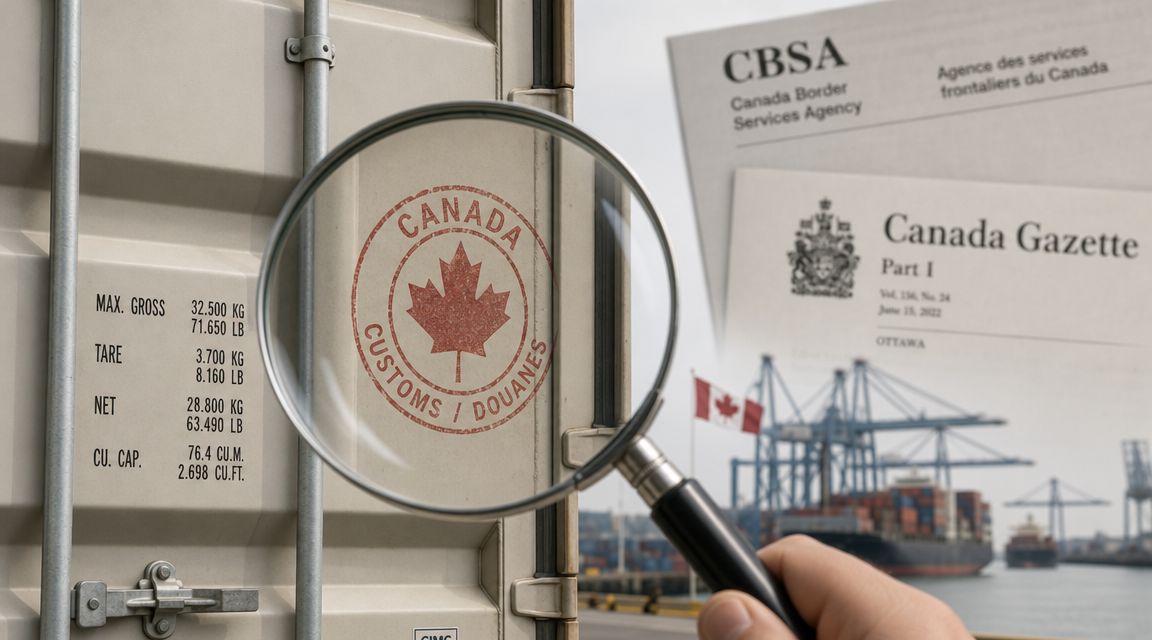
Buying goods from another country and bringing them into Canada is what we call cross-border shopping. This isn't just for big businesses moving containers; it covers everything down to that online order you just placed from your couch.
For Canadian consumers and businesses, this unlocks a global marketplace. But it also means you have to play by the rules of the Canada Border Services Agency (CBSA), which cover duties, taxes, and declarations. Getting a handle on this process is the first step to making sure your goods arrive without surprise costs or getting stuck in customs limbo.
What Is Cross-Border Shopping, Really?
At its core, cross-border shopping is the act of bringing foreign goods into Canada. It doesn’t matter if you’re an individual buying a sweater from a U.S. website or a business importing a pallet of widgets from Asia. You’re participating in the same basic process.
But it's more involved than just clicking "buy" and waiting for the doorbell to ring. Every item that crosses the border is subject to inspection and assessment by the CBSA. Think of the border as a checkpoint where your goods need the right paperwork to pass. Without it, they can get stuck, costing you both time and money.
The Two Sides of Importing
Cross-border shopping isn’t one-size-fits-all. The rules change dramatically depending on a simple question: are you importing for personal use or for your business?
- Personal Importing: This is you, buying items for yourself—like clothes, books, or electronics. The process is often simplified by the seller or courier, but you're still on the hook for any duties and taxes that apply.
- Commercial Importing: This is when you bring goods into Canada to resell or for use in your business. The compliance requirements are far more stringent. You'll need accurate documentation, correct product classification, and formal customs declarations.
The biggest mistake new importers make is underestimating compliance. A tiny error in your paperwork can balloon into significant delays, hefty fines, or even seizure of your goods. Getting it right from the start isn’t just a good idea; it’s non-negotiable.
When shopping across borders, it’s also crucial to know who you're buying from. Finding trustworthy vendors who provide the correct documentation is key. For example, if you're looking for specific products, resources like lists of the top online stores for Japanese sunscreen can help you find reputable sellers.
This guide will walk you through making both personal and commercial importing a predictable, hassle-free process.
Decoding Duties and Taxes for Canadian Imports
Let's talk about the part of cross-border shopping that often feels like a pop quiz you didn't study for: duties and taxes. Getting this right is the key to avoiding surprise costs that can sour an otherwise great purchase.
Think of these charges as the government's fees for bringing goods into the Canadian economy. The main players are duties and taxes, and while they sound similar, they aren't the same. Knowing the difference is your first step toward predictable import costs.
The Big Three Import Costs
When a shipment crosses the border, it can be hit with a few different charges. Each has a specific job.
- Goods and Services Tax (GST) / Harmonized Sales Tax (HST): This is the same sales tax you already pay in Canada. It's applied to the value of your imported goods, ensuring they're taxed just like items bought at home.
- Customs Duties: This is a tariff on specific goods as they cross the border. The goal is to protect Canada's economy and local businesses by controlling the flow of certain products into the country.
- Excise Taxes: This is a special tax on certain goods like alcohol and tobacco. If you’re not bringing in these specific items, you likely won’t have to worry about this one.
The moment your shipment's value exceeds Canada's 'de minimis' threshold—currently $40 CAD for tax and $150 CAD for duty on courier shipments from the U.S. and Mexico—these charges typically kick in. It’s the border's way of saying, "Okay, this is no longer a casual, low-value shipment."
Figuring out these costs comes down to knowing your product's "HS Code," a universal classification number for every item. We've put together a resource to help; you can check out our guide on the Canadian Customs Tariff and Harmonized System to learn more. A batch of cotton t-shirts from the U.S. might face a different duty rate than a camera from Asia, all because of their unique codes.
The sheer volume of goods crossing our borders shows why these rules matter. In a single year, the CBSA processed 30.7 million commercial shipments and a staggering 149 million courier packages, collecting $47.5 billion in duties and taxes. Getting your declarations right is a pretty big deal. You can discover more insights from the CBSA's annual report to see the full picture.
Your Secret Weapon: CUSMA
Luckily, there’s a powerful tool you can use to lower your costs: free trade agreements. For anyone buying from the U.S. or Mexico, the Canada-United States-Mexico Agreement (CUSMA) is an absolute game-changer.
If your goods "originate" in North America—meaning they were made or significantly transformed here—they may qualify for duty-free entry into Canada. This can eliminate the customs duty portion of your import costs, leaving just the GST/HST to pay. It’s not automatic, though. You need the right paperwork, like a Certificate of Origin, but the savings can be massive.
The Importer’s Playbook for Customs Declarations
Getting your goods across the border isn’t magic; it’s about providing the right information at the right time. Every shipment, from a small parcel to a full container, needs a formal introduction to the Canada Border Services Agency (CBSA). This is called a customs declaration, and it’s a non-negotiable step.
Think of it as your shipment's passport. It tells the CBSA what’s inside, where it came from, and how much it’s worth. Without it, your goods are effectively stranded at the border.
Core Components of a Declaration
While the paperwork can look intimidating, it boils down to a few key pieces of information the CBSA needs to assess and release your shipment.
- Canada Customs Invoice (CCI): The foundational document. It lists the buyer, seller, country of origin, price, and a detailed description of the goods.
- Bill of Lading (B/L): A receipt and contract between the shipper and the carrier, detailing the type, quantity, and destination of the goods.
- HS Code (Harmonized System Code): The most critical piece. This universal code tells customs authorities worldwide exactly what you’re importing.
Assigning the correct HS Code is the single most important step. An incorrect code can lead to overpaying on duties, facing penalties for underpayment, or having your shipment flagged for a lengthy inspection. We've simplified the process of finding the right documents in our article about essential customs forms for Canada.
The Digital Frontier: CARM
Canada's customs process has gone digital with the CBSA Assessment and Revenue Management (CARM) portal. This online system is now the official way for importers to manage their customs activities, including paying duties and taxes directly to the government.
CARM isn’t just new software; it’s a fundamental shift in how importing into Canada works. For any business serious about cross-border trade, getting registered and comfortable with the CARM portal is a mandatory part of the game.
The infographic below shows a simplified flow of the primary costs that CARM helps you manage.
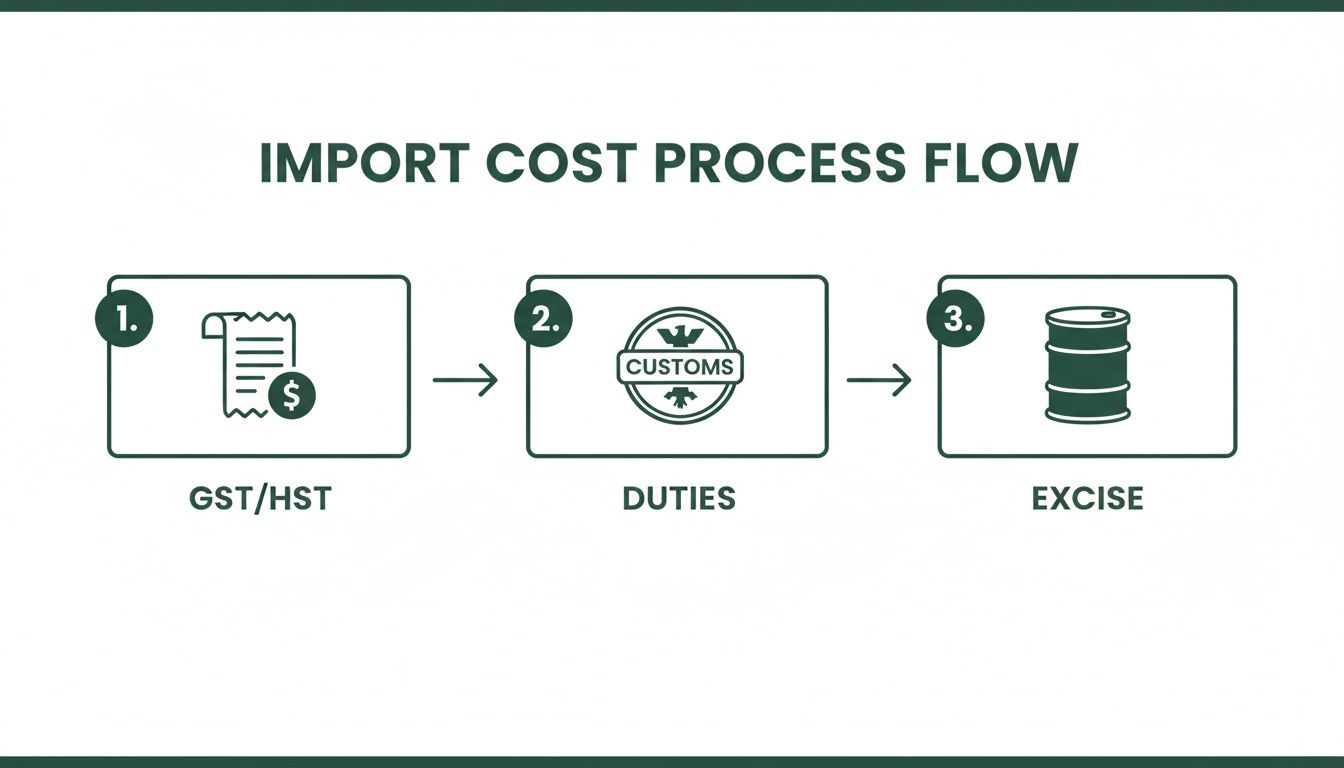
This visual breaks down the three main financial hurdles—GST/HST, Duties, and potential Excise taxes—that every commercial importer must account for in their budget.
When to Partner with a Customs Broker

You could try to fix your own plumbing, but hiring a professional is usually faster and saves you from a flooded basement. The same logic applies to customs clearance.
While it’s technically possible to handle your own import declarations, partnering with a licensed customs broker is often one of the smartest decisions a business can make. A broker is your expert representative, communicating directly with the CBSA to ensure your shipments meet all legal requirements. They don’t just fill out forms; they actively manage your compliance to prevent costly mistakes and painful delays.
Is a Broker Right for You?
A casual online shopper probably doesn’t need a broker. But for a business, that tipping point arrives quickly. If you find yourself in any of these scenarios, it’s time to call in a professional.
- You're a high-volume shipper: Managing dozens of shipments a month demands flawless execution. A broker centralizes your processes, saving you countless hours.
- You import regulated goods: Items like food, cosmetics, or certain electronics are subject to extra rules. Brokers know exactly what’s needed to satisfy these requirements.
- You're tired of clearance delays: Are your goods constantly stuck at the border? That’s a clear sign your current process isn’t working.
- You find HS codes and CARM confusing: Correctly classifying products and managing your CARM account are legal obligations. A broker handles all this complexity for you. You can also explore what a customs broker does in more detail in our other guides.
The staggering growth of cross-border e-commerce in Canada highlights the need for efficiency. 62% of Canadian consumers now buy from international sellers, driving a significant portion of Canada's CA$52 billion e-commerce market. For businesses, success hinges on swift, expert customs brokerage.
DIY Customs vs. Using a Broker
Deciding whether to manage customs in-house or hire a pro can be tough. The table below breaks down what each approach really looks like.
| Task | DIY Importer Approach | With a Customs Broker (e.g., J.W. Smith) |
|---|---|---|
| Tariff Classification | You research and assign HS codes, risking errors and penalties if you get it wrong. | An expert classifies your goods correctly, minimizing duty rates and ensuring compliance. |
| CARM Portal Management | You're responsible for registering, managing payments, and delegating authority yourself. | We guide you through CARM setup and can manage portal tasks on your behalf. |
| Documentation Submission | You prepare and submit all forms to CBSA, hoping everything is accurate and complete. | We review and submit all necessary documentation, catching errors before they cause delays. |
| Customs Bonds | You must secure your own Release Prior to Payment (RPP) bond, a complex and costly process. | We handle the bonding requirements for you, allowing for immediate release of your goods. |
| Problem Resolution | If a shipment is held, you have to deal directly with CBSA officials to sort it out. | We act as your representative, communicating with CBSA to resolve issues quickly. |
| Compliance & Audits | You are solely responsible for staying up-to-date on regulatory changes and facing audits alone. | We provide proactive compliance advice and support you fully in the event of a CBSA audit. |
While a DIY approach might seem to save money upfront, the risks of costly fines, seized goods, and supply chain chaos often make it the more expensive option in the long run.
The True Value a Broker Provides
Beyond just paperwork, a customs broker offers strategic advantages. They manage customs bonds—financial guarantees that allow your goods to be released by the CBSA before duties and taxes are paid. This single benefit can dramatically speed up your supply chain.
A customs broker doesn't just clear your goods; they provide peace of mind. They are your compliance insurance, saving you from fines, audits, and the stress of navigating a complex regulatory system alone.
Ultimately, partnering with a broker is an investment in efficiency and risk management. It frees you up to focus on growing your business, confident that your cross-border operations are in expert hands.
Cross Border Shopping for U.S. Businesses
Hey, American friends! Selling to millions of shoppers up north is a massive opportunity, but the Canadian border has its own rulebook. For U.S. businesses, mastering cross-border shopping isn’t just about shipping; it’s about creating a customer experience that feels local.
This is where the Non-Resident Importer (NRI) program comes in. It’s a game-changer that allows your U.S. company to act as the official importer for goods sold into Canada.
Instead of leaving your Canadian customers to deal with surprise duty bills and customs paperwork—a surefire way to increase cart abandonment—the NRI model lets you handle everything upfront. You manage all import logistics and taxes, presenting a final, all-in price to your customer at checkout. It's the "buy it and forget it" experience that Canadian shoppers love.
The Strategic Edge of Being an NRI
Becoming an NRI is a strategic move that transforms the customer experience. When a Canadian buyer sees a final price with no hidden fees, their trust in your brand skyrockets. This simple shift can dramatically reduce cart abandonment and boost repeat business.
The Canadian e-commerce market is ripe with opportunity. In 2024, Canada was home to 30 million online shoppers fueling a robust C$65.5 billion e-commerce market. A striking 55% of these shoppers made cross-border purchases, looking to U.S. retailers for great deals.
Think of the NRI model as rolling out a welcome mat for Canadian customers. You're removing the biggest points of friction—surprise costs and customs hassles—and replacing them with the predictability they'd expect from a local retailer.
To operate as an NRI, there are a few key steps you’ll need to follow. These are CBSA requirements to legally import and sell your goods in Canada.
- Obtain a Business Number (BN): This is your official identification number with the Canadian government for all tax-related matters.
- Register for GST/HST: As the importer, you are responsible for collecting and remitting the appropriate sales tax on your sales.
- Partner with a Canadian Customs Broker: An experienced broker is your essential partner on the ground. They manage your customs declarations and ensure compliance with all CBSA regulations.
Navigating the NRI program might seem complex, but the payoff is immense. It unlocks access to a lucrative market and builds a loyal Canadian customer base by making cross-border shopping feel effortless.
Practical Tips for Faster and Cheaper Imports
Alright, let's move from theory to action. Making your cross-border experience smoother and more cost-effective comes down to a few smart habits.
Think of your shipping documents as a pre-flight checklist. The first step is to work with your suppliers. Politely insist they provide crystal-clear product descriptions and accurate commercial invoices. Vague descriptions like "parts" or "samples" are immediate red flags for customs and practically guarantee a delay.
Get Strategic With Shipments and Carriers
Consolidating multiple small orders into one larger shipment is an easy way to cut costs. You pay brokerage and freight fees once, not multiple times. This simple change can significantly reduce your per-item cost.
Choosing the right shipping method is also crucial.
- Couriers (e.g., UPS, FedEx): Ideal for smaller, time-sensitive parcels. They often handle basic customs clearance, but be warned—their brokerage fees can be surprisingly high for commercial goods.
- Freight Carriers: The go-to for larger, palletized shipments. This option offers much lower per-kilogram costs but requires a formal customs clearance process—this is where your broker truly shines.
To get the best deal on your purchases, understand and optimizing landed costs is essential. This is the total cost to get the product to your door, including the product price, shipping, duties, taxes, and brokerage fees.
The most powerful tool in your importing toolkit? Proactive communication. A quick heads-up to your customs broker about an incoming shipment gives them time to prepare. That simple email can turn a week-long delay into an hour-long clearance.
Answering Your Cross-Border Shopping Questions
We get a lot of questions about the ins and outs of cross-border shopping. Here are answers to some of the most common queries we hear.
How Long Does Customs Clearance Take?
This is the million-dollar question. The honest answer is: it depends. When all paperwork is accurate, a customs broker can often get a shipment cleared in about an hour. But when delays happen, there's always a reason.
Common culprits for delays include:
- Missing or Vague Paperwork: If an invoice describes items as just "parts," CBSA will flag it for a closer look. Specificity is key.
- Incorrect HS Codes: Classifying a product with the wrong code can stop a shipment while officials figure out the correct duty rate.
- Random Inspections: Sometimes, it’s just routine. The CBSA performs random physical inspections to ensure everything is above board.
Can I Handle My Own Customs Declarations?
Legally, yes. But it’s a bit like doing your own corporate taxes—possible, but incredibly risky if you’re not an expert. The process involves correctly classifying goods with HS codes, filling out complex forms, managing payments through the CARM portal, and securing a customs bond.
For businesses, the risks of a DIY approach almost always outweigh the perceived savings. A simple error can lead to significant fines and supply chain disruptions that cost far more than a broker's fee.
What Is a De Minimis Threshold?
Think of the "de minimis" threshold as the value below which you don't have to pay duties and taxes. For courier shipments from the United States or Mexico, goods valued at $150 CAD or less are generally free of duties. Goods valued at $40 CAD or less are free of both duties and taxes (GST/HST).
However—and this is a big "however"—these thresholds don't apply to all goods or all shipping methods. The moment your shipment's value goes over these amounts, you're on the hook for all applicable duties and taxes. It’s a common point of confusion that leads to nasty surprise costs.
Navigating the rules of cross-border shopping can feel overwhelming, but it doesn't have to be. At J.W. Smith Customs Brokers Ltd., we bring the expertise and support to make your import process predictable and smooth. Let us handle the complexities so you can focus on what you do best. Get in touch with our team today!
Need Help with Customs?
J.W. Smith Customs Brokers has over 50 years of experience helping Canadian businesses navigate imports with confidence. Our team of licensed customs brokers is ready to assist with your import and export needs.