Essential Guide to Importing Medical Devices into Canada
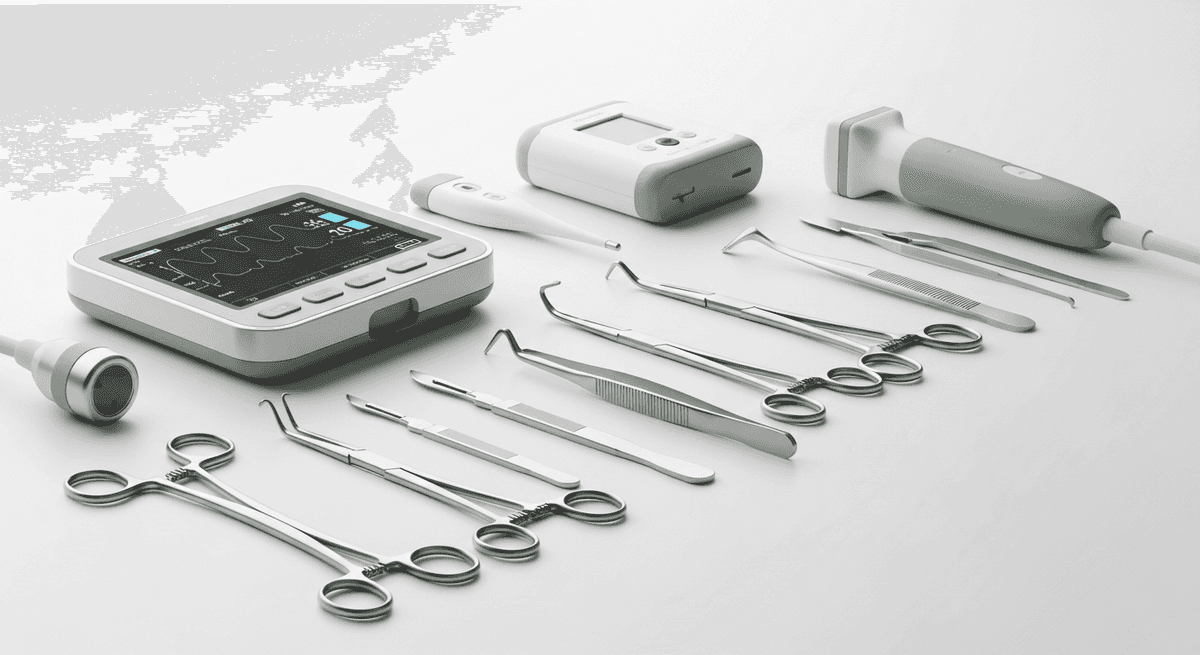
Welcome to the world of importing medical devices into Canada with J.W Smith Customs Broker! If you're bringing in essential items like ventilators, face masks, or hospital beds, understanding the key players and regulations is crucial. Let's dive into the fundamentals of medical supply imports.
Let's break down the parties involved in your medical device imports:
Canada Border Services Agency (CBSA)
Health Canada
Customs Broker
Main Regulatory Requirements
- **Compliance Mandates: **Ensure that all goods imported into Canada adhere to the provisions outlined in the Food And Drug Act and the Medical Devices Regulations.
- **Device Classification: **Items are categorized into four classes, ranging from the least risky (Class 1) to the most hazardous (Class 4). Consult the Medical Devices Active License Listing database to determine the appropriate class for your imports.
- **Labeling and Approval Criteria: **Specific directives exist concerning labeling and the necessary approvals for marketing.
- **Importer Licensing: Commercial **importers may need to secure an Establishment Licence, Site Licence, or Establishment Registration, or obtain clearance for clinical trials.
- **Good Manufacturing Practices (GMP): **Abide by the standards for Good Manufacturing Practices as stipulated in the Food and Drugs Act.
- Definition of Medical Device:[ol]- According to the Food and Drug Act, a medical device encompasses any article, instrument, apparatus, or contrivance designed for:- Diagnosing, treating, mitigating, or preventing diseases or disorders in humans or animals;- Restoring, correcting, or altering body functions or structures in humans or animals;- Detecting pregnancy in humans or animals; Providing care during pregnancy, childbirth, and postpartum, including neonatal care. This definition includes contraceptive devices but excludes drugs.[/ol]## Face Masks and Other Medical Supplies
Disposable face masks, medical gowns, and face shields used to prevent infection transmission typically fall into Class I medical device categories. However, several products share this classification based on their industry but remain unregulated if they lack medical claims—examples include disposable gloves, plastic tubing, and gauze.
While Class I devices aren't mandated to be licensed, securing a Medical Devices Establishment License (MDEL) or Health Canada authorization under the COVID-19 Interim Order is necessary for importation. Exemptions apply to:
[ol]- Retailers- Health care facilities- Manufacturers distributing via licensed entities- Individuals importing devices for personal use- Establishments dealing exclusively with veterinary products, dispensing, or custom-made and specialized devices for medical purposes.[/ol]
Health Canada's guidance document on Medical Device Establishment Licensing and Medical Device Establishment Licence Fees (GUI-0016) outlines the definitions of Retailers, Health Care Facilities, and Ultimate Consumers:
- Retailers are individuals who exclusively sell devices or services utilizing devices to the ultimate consumer or end user. Note: Many retailers may not be aware if devices are being purchased by ultimate consumers for personal use. However, sales to individuals identified as not being ultimate consumers classify the seller as a distributor rather than a retailer. (A Distributor of medical devices does require an MDEL.)
- A Health Care Facility is defined as a facility providing diagnostic or therapeutic services to patients. It encompasses a group of such facilities reporting to a common management responsible for their activities.
- An Ultimate consumer is an individual who purchases or receives a medical device for personal use (including within their household) or undergoes treatment or diagnosis with a medical device from a healthcare facility or provider. Businesses purchasing medical devices solely for employee use during work activities (e.g., first aid kits, disposable gloves) or for incidental emergency use are also considered ultimate consumers, provided they do not offer healthcare services to employees or other individuals.
If uncertain about qualifying for these exemptions, please contact Health Canada’s Medical Devices Directorate at hc.meddevices-instrumentsmed.sc@canada.ca.
If you require guidance with a Medical Device Establishment license, feel free to reach out to us.
Note: Although Class I devices are exempt from the device licensing requirements of Sections 26 to 43 of the Medical Devices Regulations, it remains the manufacturer's responsibility to ensure that Class I devices imported for sale or sold in Canada comply with all relevant sections of the Medical Devices Regulations.
Face masks and other personal protective equipment lacking medical claims and not intended for healthcare use are not regulated by Health Canada. We recommend that customs documents clearly state that masks are not for medical use, and the product should be marked with a notation such as “Not for Medical Use” or “For Industrial Use.”
Avoid using medical claims in packaging, including words like "health care," "examination," "patient examination," "sterile," or "medical grade," or symbols suggesting medical use, such as care, body, safe, guard, or cross.
Import Essentials
- As the Importer of Record, you assume full responsibility for the accuracy and completeness of the import declaration and the payment of applicable duties and taxes in Canada.
- Duty and tax payments are obligatory upon importation into Canada.
- The duty rate is determined based on the tariff classification of the imported commodity, the goods' value, and their origin.
- Specific import documentation must be presented to the border services officer at the port of entry.
- Your import could undergo customs review, inspection, or audit before or after arrival, and additional fees may be imposed by the Government of Canada for these services.
- You are required to retain your import records for six years following the import date and may be subject to Customs audits during this period.
Navigating the import process in Canada requires diligence and adherence to regulatory requirements. As the Importer of Record, you play a critical role in ensuring the accuracy of import declarations and the timely payment of duties and taxes. Understanding the duty rate calculation based on tariff classification, value, and origin is essential for cost-effective importing. Remember to prepare and present the necessary import documentation to border services officers and be aware that imports can undergo customs scrutiny at any time. By maintaining meticulous import records for six years, you can facilitate smooth customs audits and compliance. For expert guidance and assistance with your imports, reach out to J.W Smith Customs Broker—we're here to simplify your importing journey and ensure compliance with Canadian import regulations.
Need Help with Customs?
J.W. Smith Customs Brokers has over 50 years of experience helping Canadian businesses navigate imports with confidence. Our team of licensed customs brokers is ready to assist with your import and export needs.