Every year, thousands of Canadian businesses experience costly shipment delays simply because of missing or inaccurate paperwork. Navigating the customs process is a vital part of international trade, yet even one overlooked detail can halt your goods at the border. By understanding exactly what customs officials expect, you can minimize disruptions and protect your reputation—saving both time and money.
Table of Contents
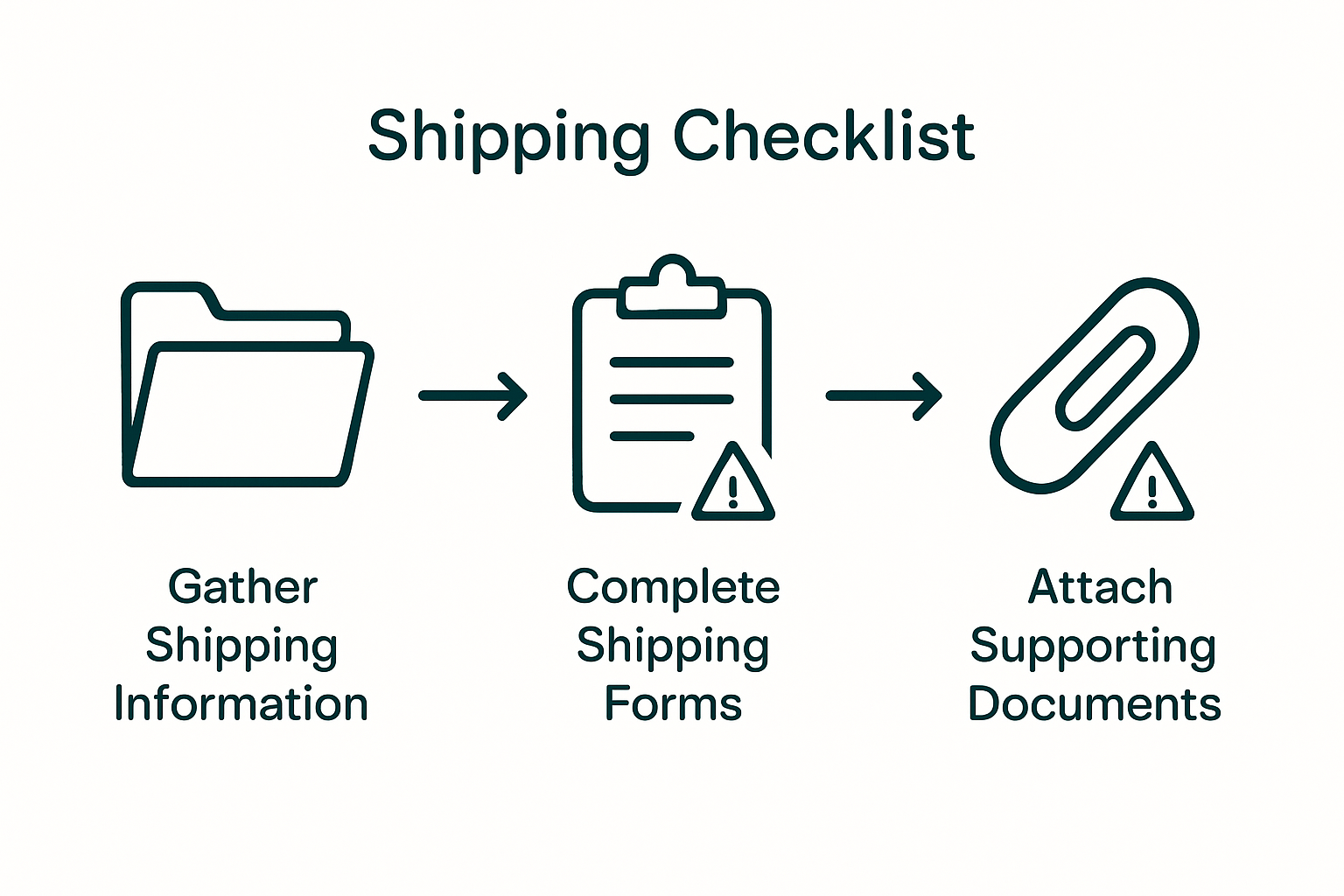
- Step 1: Gather Required Shipment Information
- Step 2: Complete Essential Shipping Forms
- Step 3: Attach Supporting Trade Documents
- Step 4: Verify Details For Compliance And Accuracy
- Step 5: Submit Documents To Relevant Parties
Quick Summary
| Key Point | Explanation |
|---|---|
| 1. Gather Complete Shipping Documents | Compile essential documents like invoices and packing lists to ensure smooth customs clearance. |
| 2. Accurately Complete Shipping Forms | Fill out critical forms accurately to comply with trade regulations and avoid delays. |
| 3. Verify Documentation for Errors | Meticulously review all details against original records to eliminate discrepancies that impede processing. |
| 4. Submit Documents Timely | Ensure that all paperwork is submitted to relevant parties well ahead of the shipping date to facilitate approval. |
| 5. Maintain Document Backups | Keep both digital and physical copies of all documents for at least six years for future reference and compliance. |
Step 1: Gather Required Shipment Information
Successful customs clearance starts with meticulous document preparation. Your goal in this crucial step is to compile a comprehensive set of shipping documents that will facilitate smooth border crossing and minimize potential delays.
Begin by collecting the essential paperwork for your commercial shipment. These documents typically include a commercial invoice that details the transaction, a precise packing list itemizing every shipped product, and certificates that validate your goods. Specifically, you will want to assemble:
- Commercial Invoice: A detailed record showing transaction value, product descriptions, and pricing
- Packing List: An itemized inventory of shipped goods with exact quantities and weights
- Certificate of Origin: Documentation proving where the products were manufactured
- Shipping Waybill or Bill of Lading: Official transportation document tracking the shipment
Pro tip: Always maintain multiple copies of each document. Digital and physical backups can save significant time if any paperwork gets misplaced during transit. Additionally, ensure all documents are current and accurately reflect the shipment details to prevent potential customs hold-ups.
With your documentation gathered, you are now prepared to move forward to the next critical stage of customs preparation. Accurate information collection sets the foundation for a seamless import process.
Step 2: Complete Essential Shipping Forms
After gathering your shipment documents, you will now complete the critical shipping forms that enable legal and efficient customs processing. Your objective is to accurately document your commercial goods in a manner that satisfies both Canadian and international trade regulations.
Focus first on preparing your commercial invoice, which serves as the official record of your transaction. This document must include precise details such as:
- Exporter and importer full legal names and contact information
- Complete product descriptions
- Harmonized System (HS) codes for each item
- Total shipment value in the appropriate currency
- Specific weights and measurements
- Country of manufacture
- Payment and shipping terms
The customs declaration form requires equally careful completion. This document provides government authorities with comprehensive information about your imported goods, including their economic impact and potential regulatory considerations. Ensure every field is filled out accurately and legibly.
Warning: Incomplete or inaccurate forms can trigger extensive customs reviews, potentially causing significant shipping delays. Double check all entries against your original documentation to prevent costly mistakes.
With your shipping forms completed, you are ready to move to the next stage of preparing your shipment for smooth customs clearance.
Step 3: Attach Supporting Trade Documents
With your primary shipping forms complete, you now enter a critical phase of documentation preparation. Your goal is to compile and attach all supplementary trade documents that substantiate the details of your commercial shipment and facilitate smooth customs processing.
Start by preparing your customs clearance documentation with a comprehensive Certificate of Origin. This document serves as an official attestation that your goods genuinely originate from a specific country, which can significantly impact tariff classifications and potential trade agreements. Essential supporting documents include:
- Certificate of Origin: Verifying the manufacturing country
- Product Inspection Certificates: Confirming goods meet international quality standards
- Health and Safety Compliance Certificates: Demonstrating regulatory adherence
- Specific Industry Certifications: Validating specialized product requirements
- Electronic Cargo Tracking Notes: Providing comprehensive shipment tracking information
Pay particular attention to the detailed requirements for each document. Some trade agreements or specific product categories might demand additional or specialized documentation beyond standard requirements.

Warning: Incomplete or improperly prepared supporting documents can result in significant customs delays, potential financial penalties, or even shipment rejection. Meticulously review each document to ensure absolute accuracy and compliance with current international trade regulations.
With your supporting trade documents carefully assembled and attached, you are now prepared to advance to the next stage of your shipping preparation process.
Step 4: Verify Details for Compliance and Accuracy
With your shipping documentation nearly complete, you must now conduct a meticulous review to guarantee every detail meets regulatory requirements. Your objective is to eliminate potential errors that could compromise your shipment’s smooth passage through customs.
Carefully cross reference all documents against your original records, ensuring absolute consistency. Customs clearance best practices dictate that even minor discrepancies can trigger extensive inspections or potential shipment delays. Pay special attention to these critical verification points:
- Product descriptions match exactly across all documents
- Monetary values are consistent and accurately converted
- Harmonized System codes align precisely
- Shipper and recipient information is complete and correct
- Measurement units are uniform and standardized
- All required signatures are present and current
Remember that shipping documentation must be maintained for a minimum of five years after the export transaction. This means creating both digital and physical backup copies of all shipping records, including commercial invoices, waybills, export filings, and communication logs.
Warning: Accuracy is not just about avoiding delays it is about maintaining your business reputation. A single overlooked detail can result in financial penalties, shipment rejections, or potential legal complications that far exceed the time invested in thorough document verification.
With your documents thoroughly checked and verified, you are now positioned to move forward confidently in the shipping process.
Step 5: Submit Documents to Relevant Parties
You have now reached a critical stage where your meticulously prepared shipping documents must be distributed to the appropriate governmental and commercial entities. Your objective is to ensure timely submission of all necessary paperwork to facilitate smooth customs processing and regulatory compliance.
Begin by preparing digital and physical copies of your complete documentation package. Customs clearance best practices recommend submitting your documents well in advance of your actual shipping date. Key parties to receive your documentation include:
- Canadian Border Services Agency
- Shipping carrier or freight forwarder
- Customs broker
- Importer of record
- Relevant trade regulatory agencies
Pay close attention to submission timelines. Most regulatory bodies require documentation to be filed at least 10 days prior to shipment, which provides sufficient time for comprehensive review and potential clarification requests.
Warning: Different shipping methods may require specific documentation variations. For instance, land shipments might need different forms compared to ocean or air freight. Confirm the exact requirements for your specific transportation mode to prevent potential processing delays.
With your documents successfully submitted to all required parties, you are now positioned to move toward the final stages of your international shipping preparation.
Simplify Your Customs Documentation with Expert Support
Navigating the complexities of preparing shipping documents for smooth customs clearance can feel overwhelming. From gathering accurate commercial invoices and certificates of origin to ensuring full compliance with customs declaration forms, each detail matters. Mistakes or omissions risk costly delays and penalties. You need a trusted partner who understands every step, from exact Harmonized System codes to timely submissions, to protect your shipment and reputation.
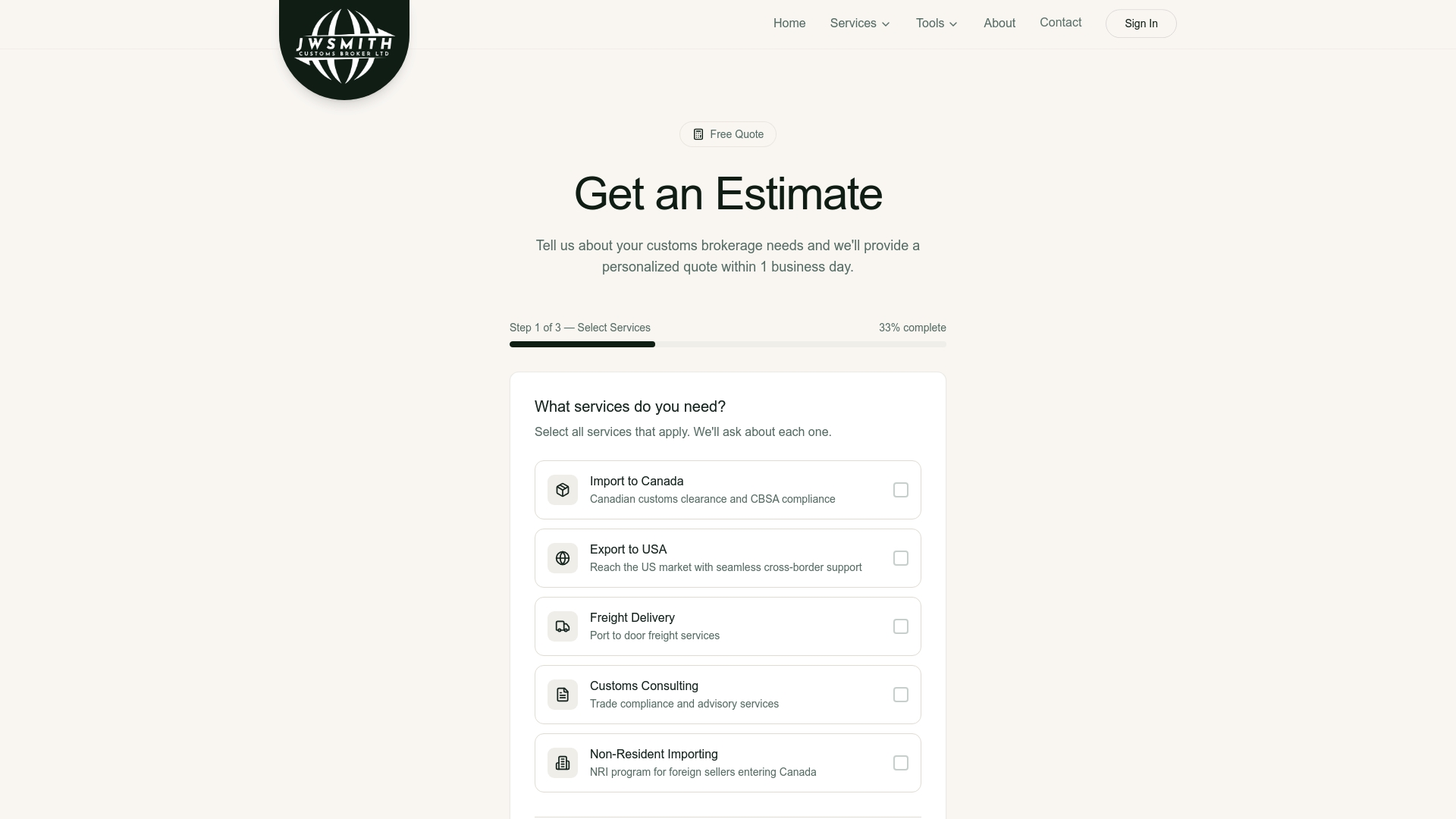
Take control of your import process today with J.W. Smith. Our professional customs brokerage services bring over 50 years of expertise in cross-border trade between Canada and the USA. We specialize in handling your entire customs clearance, CARM registration, and import bond requirements so you can focus on your business growth. Get a personalized quote now and experience smoother shipments through expert guidance at Get Your Estimate. Discover why companies trust our reliable Canadian customs brokerage and consulting to avoid delays and costly errors.
Frequently Asked Questions
What documents are required for smooth customs clearance?
To ensure smooth customs clearance, you will need a Commercial Invoice, Packing List, Certificate of Origin, Shipping Waybill or Bill of Lading, and a Customs Declaration Form. Gather and verify these documents to avoid delays in the shipping process.
How do I complete the Commercial Invoice for shipping?
To complete the Commercial Invoice, include the full legal names and contact information of both the exporter and importer, detailed product descriptions, Harmonized System codes, total shipment value, and weight measurements. Double-check these entries for accuracy to minimize the risk of customs holds.
What supporting documents should I attach to my shipment?
You should attach a Certificate of Origin, Product Inspection Certificates, Health and Safety Compliance Certificates, and any specific Industry Certifications relevant to your goods. Assemble these documents to substantiate your shipment details and adhere to trade regulations.
How can I verify my shipping documents for compliance?
To verify compliance, cross-reference all your shipping documents against the original records and ensure consistency in product descriptions, monetary values, and HS codes. Aim to catch any discrepancies before submission to prevent potential customs delays.
When should I submit my shipping documents?
Submit your shipping documents at least 10 days prior to the shipping date to allow sufficient time for review and potential clarifications. Create both digital and physical copies to facilitate timely submissions to relevant parties.
What should I do if I find errors in my shipping documents?
If you find errors in your shipping documents, correct them immediately before submission to ensure accuracy and compliance with customs regulations. Take time to double-check all details to avoid delays or penalties during customs processing.
Recommended
- 7 Essential Customs Clearance Best Practices for Success | J.W. Smith Customs Brokers
- How to Complete a Canada Customs Invoice | J.W. Smith Customs Brokers
- How to Streamline Your Customs Clearance Process | J.W. Smith Customs Brokers
- Freight Delivery | Port Pickup & Local Delivery | J.W. Smith
- UK Customs Rules for Importing from China 2025
- International Parcel Shipping - Custom Solutions & Affordable Rates
- Understanding Cannabis Product Shipping Laws: What You Need to Know – California Blendz
Need Help with Customs?
J.W. Smith Customs Brokers has over 50 years of experience helping Canadian businesses navigate imports with confidence. Our team of licensed customs brokers is ready to assist with your import and export needs.