How to Streamline Your Customs Clearance Process

Trying to catch a bus ride in Canada is simple. You show up, present your ticket, and you're on your way.
The customs clearance process has a similar idea. Cross-border organizations move goods from one place to another. However, it is not that simple. It's more like showing up at the terminal and being told, “We need five forms, three approvals, and a breakdown of goods being moved.”
If shipping documentation is incomplete or cargo needs reclassification, the shipment is placed on hold until further notice.
For manufacturers, e-commerce companies, distributors, and importers who rely on smooth border crossing, an error can bring everything to a halt. And that means delays, extra costs, and disrupted deliveries.
This guide will walk you through the essentials of the customs clearance process in Canada. This entails shipping documentation, the use of automation, and staying compliant with border laws.
Accurate Product Classification During the Customs Clearance Process
Everything starts with how goods are classified. Get that wrong, and the customs clearance process starts to fall apart.
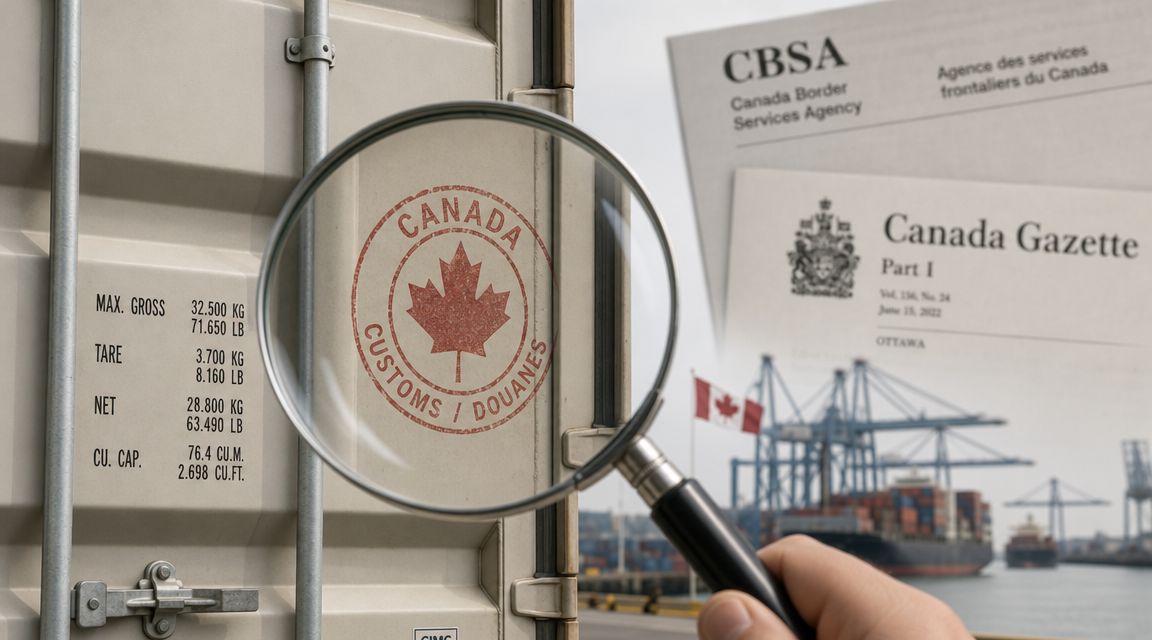
The Canada Border Services Agency (CBSA) uses the Harmonized System (HS), which assigns a six-digit code to every product type. In Canada, this is extended to a 10-digit tariff classification number.
This digit tells customs exactly what products are being shipped in and how they should be taxed. It also helps officials determine if there is a need for additional review.
For example, electronics, textiles, or food products each have their own code. However, a cotton T-shirt and a polyester T-shirt don’t share the same code. Although they are both shirts, their codes differ.
If retailers, importers, or distributors use the wrong code, the duty rate could be higher than it should be. In a worst-case scenario, customs might flag the shipment, delay it, or fine the company for non-compliance.
Product Declaration
A product declaration entails the accurate product market valuation, country of origin, and quantity reporting. Undervaluing a product or misstating quantities is illegal.
In Canada, some goods require special licenses, permits, compliance management, and paperwork before they can be imported. Such goods are not outright banned. They are more tightly controlled because of safety, health, or regulatory concerns.
Some of these goods include:
- Cosmetics: Products like skincare or makeup must meet Health Canada’s safety standards. Some may require ingredient disclosure, safety data, or pre-approval if they contain certain substances.
- Food products: Food importation must follow rules set by the Canadian Food Inspection Agency (CFIA). Distributors may require import licenses. The food must also meet health, labelling, and storage standards.
- Pharmaceuticals: Medicines, supplements, and medical devices all fall under Health Canada’s regulatory framework. Importation without permits can lead to delays, seizure, or legal penalties.
These types of products can still be brought in, but only if the required compliance management standards are met.
Shipping Documentation Must Be Complete
A small mistake in shipping documentation can cause problems in customs clearance. Here is the basics:
Distributors, importers, retailers, and all personnel or firms involved in cross-border trades will need a Bill of Lading, Commercial Invoice, Packing List, and sometimes a Certificate of Origin.
- Bill of Lading: This document serves as proof of ownership and receipt of goods. It is required by both the shipper and receiver to confirm that goods are in transit and will reach the delivery point.
- Commercial Invoice: This is a bill from the seller to the buyer. It lists the products, their value, and terms of trade. Customs officials use this bill to assess duties and taxes on the shipment.
- Packing List: This shipping documentation is a breakdown of the cargo, including how products are packed, the quantity of each item, and the type of packaging.
- Certificate of Origin: This document certifies the country where the goods were produced. The main purpose of this document is to qualify for trade benefits or exemptions under a trade agreement.
These shipping documents should be ready before your goods arrive at the border. Incomplete or late paperwork can slow the customs clearance process.
The CBSA verifies submitted shipping documentation using systems like the CBSA Assessment and Revenue Management (CARM). If the numbers do not match up, the shipment will be flagged.
Automation Can Be Helpful (Even for Small Businesses)
We are almost halfway through 2025. Automation is no longer just for large companies; small businesses can also benefit.
Tools such as Electronic Data Interchange (EDI) allow you to send and receive documents electronically. This eliminates manual data entry. The EDI tool also cuts down on errors and speeds up the customs clearance process.
Another useful tool is the Automated Commercial Environment (ACE). This system enables cross-border firms to submit documents and track shipments online. Customs brokers also utilize similar tools, making it easier to synchronize data.
Automation reduces bottlenecks. It makes sure shipment documentation is correct and submitted on time. This means fewer delays and mistakes, resulting in a smoother border crossing.
Compliance Management
The most common mistake made entails narrowing compliance management to just ticking boxes when a shipment arrives. This is not true. Importers and international trade firms must be prepared all year, not just when goods are in transit.
In Canada, importers must keep shipping documentation and records for a minimum of six years. That includes invoices, permits, and classification details. Keep them organized and store them securely.
Internal audits help, too. Cross-border companies should always review customs records regularly. Catch mistakes early before the CBSA does. Fix them before they snowball into fines or shipment delays.
Good compliance management is not a one-time task. It requires continuous efforts that protect businesses, minimize delays, and support a smooth border crossing every time.
Why is customs broker support needed in 2025?
Many importers and international trade firms want to handle the customs clearance process themselves. It feels safer and is cheaper. Over time, however, it becomes increasingly risky and unsustainable. Mistakes pile up and cost more than expert help would.
A customs broker does more than just file forms. These experts guide importers and companies through every step of the process. This includes shipping documentation to understand the latest regulatory changes.
There is also a tricky product classification. Whether it is unusual items or large-volume imports, they have seen it all and know how to keep the customs clearance process moving.
In 2025, brokers are not an option, but essential. They help avoid surprises and improve commitment to compliance management.
J.W. Smith Is Your Behind-the-Scenes Customs Partner
We won’t be seen on warehouse floors, but our presence will be felt in every smooth border crossing, every avoided delay, and every accurate declaration.
J.W. Smith is reliable and one of the leading customs brokers in Canada. We file paperwork and manage risks. That means catching issues before they cost time or money.
Our approach to shipment is not one-size-fits-all. Each service is structured to suit specific needs:
- Canadian customs brokerage for importers in need of a quick and compliant goods entry. This includes textiles and apparel, medical and pharma products, electric devices, and more.
- U.S. customs brokerage for Canadian firms shipping south.
- Non-resident importing for companies without a Canadian entity.
- Vehicle importing for businesses only.
We stand by our work. If we don’t deliver what we promise, money back is guaranteed. It is our policy and not just noise.
Our expert customs brokers have what it takes to support and speed up Canada’s customs clearance process like a true behind-the-scenes partner!
Reach out to J.W. Smith today at 1-888-528-3059 or contact us online so we can work together to ensure a smooth border crossing for your next shipment.
Need Help with Customs?
J.W. Smith Customs Brokers has over 50 years of experience helping Canadian businesses navigate imports with confidence. Our team of licensed customs brokers is ready to assist with your import and export needs.