Navigating the New 25% Tariffs on Steel Derivative Products: An Importer's Guide
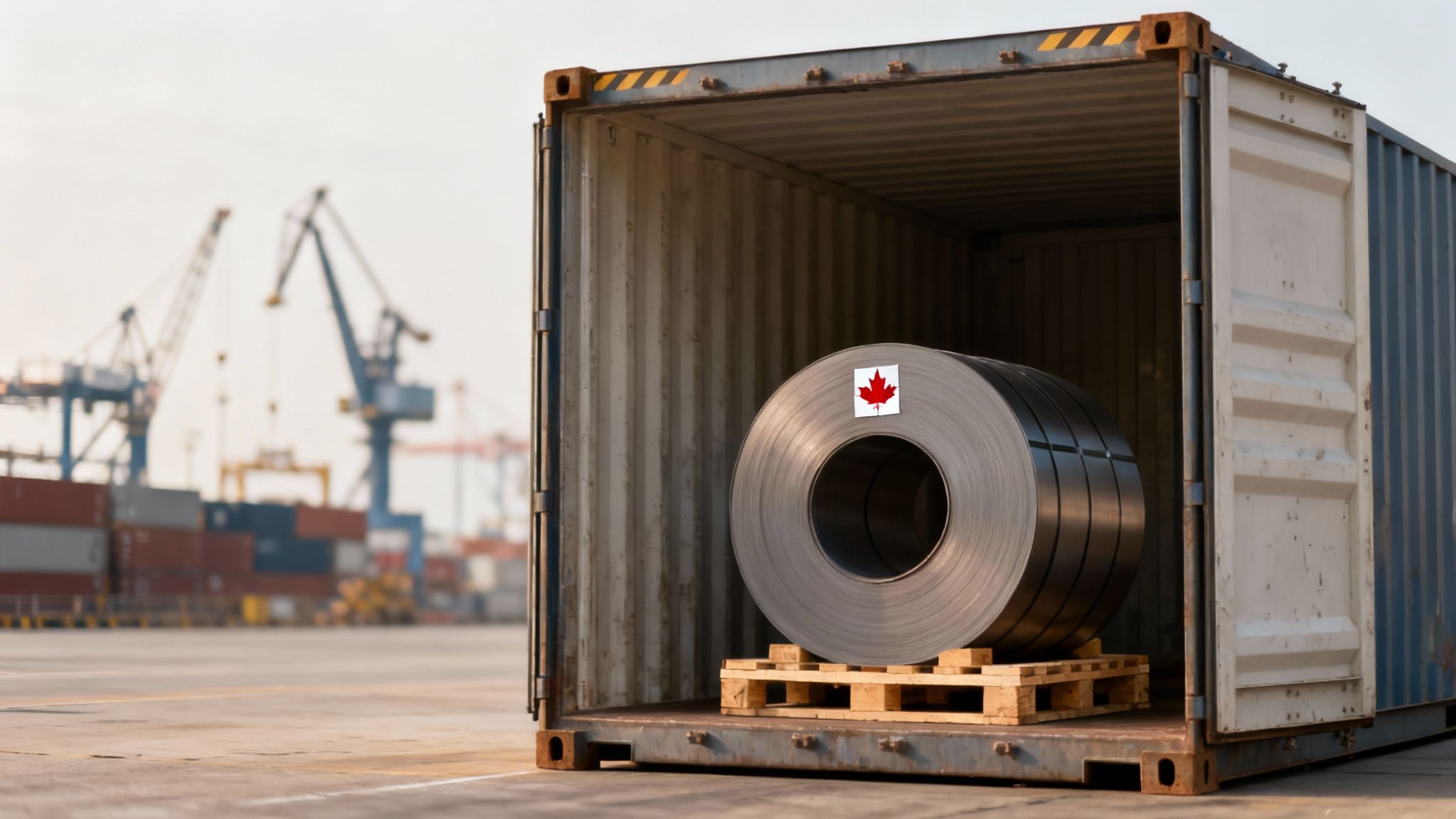
If you import certain steel products into Canada, a significant regulatory change is set to directly impact your bottom line. Effective December 26, 2025, a new 25 per cent tariff will be applied to a specific list of steel derivative products originating from various countries.
This is not a minor adjustment; it is a substantial financial measure that will increase the landed cost of your goods. As an importer, proactive preparation is essential to maintain compliance and protect your profitability.
What's Behind Canada's New Steel Derivative Tariffs?
The Canadian government, through the Department of Finance, has introduced this 25 per cent surtax as a safeguard measure for the domestic steel industry. This action is primarily defensive, aimed at preventing the diversion of foreign steel into the Canadian market. As global trade dynamics shift, particularly in response to U.S. trade policies, there is a recognized risk of foreign steel being redirected to Canada at prices that could undermine domestic producers.
This tariff is specifically designed to counteract such market distortion and shield Canadian steel manufacturers from unfair competition.
For Canadian importers, however, the immediate consequence is a sharp increase in costs for affected products. This policy has tangible implications for your supply chain, pricing models, and overall financial health.
Actionable Steps for Importers
Navigating this new tariff landscape requires a renewed focus on compliance and strategic cost management. Here are the key areas that demand your immediate attention:
- Verify Product Classification: Correctly identifying the Harmonized System (HS) code for your products is your first and most critical task. An error in classification can lead to overpayment of duties or, more severely, penalties and fines for non-compliance.
- Analyze Your Supply Chain: This is the time to reassess your sourcing strategy. Can you identify alternative suppliers in countries not subject to these tariffs? Does sourcing from domestic producers now offer a more cost-effective advantage?
- Update Financial Projections: The 25 per cent tariff must be incorporated into your financial planning. Update your landed cost calculations, adjust pricing models, and ensure your budgets account for this new expense to prevent unexpected financial strain.
The government’s official notice provides the complete list of targeted products. The list is defined by specific HS codes, underscoring the critical importance of accurate tariff classification.
These tariffs are part of a broader trend in global trade protectionism. For a more comprehensive understanding of the context, it's beneficial to be aware of related measures, like the expansion of Section 232 steel and aluminum tariffs and their cascading effects across North American supply chains.
Identifying Which Steel Products Are Subject to Tariffs
Determining which of your imports are affected by the new 25 per cent tariff requires a detailed review of your product catalogue. This is not a blanket tax on all steel; the Canadian government is targeting a specific list of steel derivative products subject to 25 per cent tariffs. These are items where steel is the primary component and constitutes the majority of the product's value.
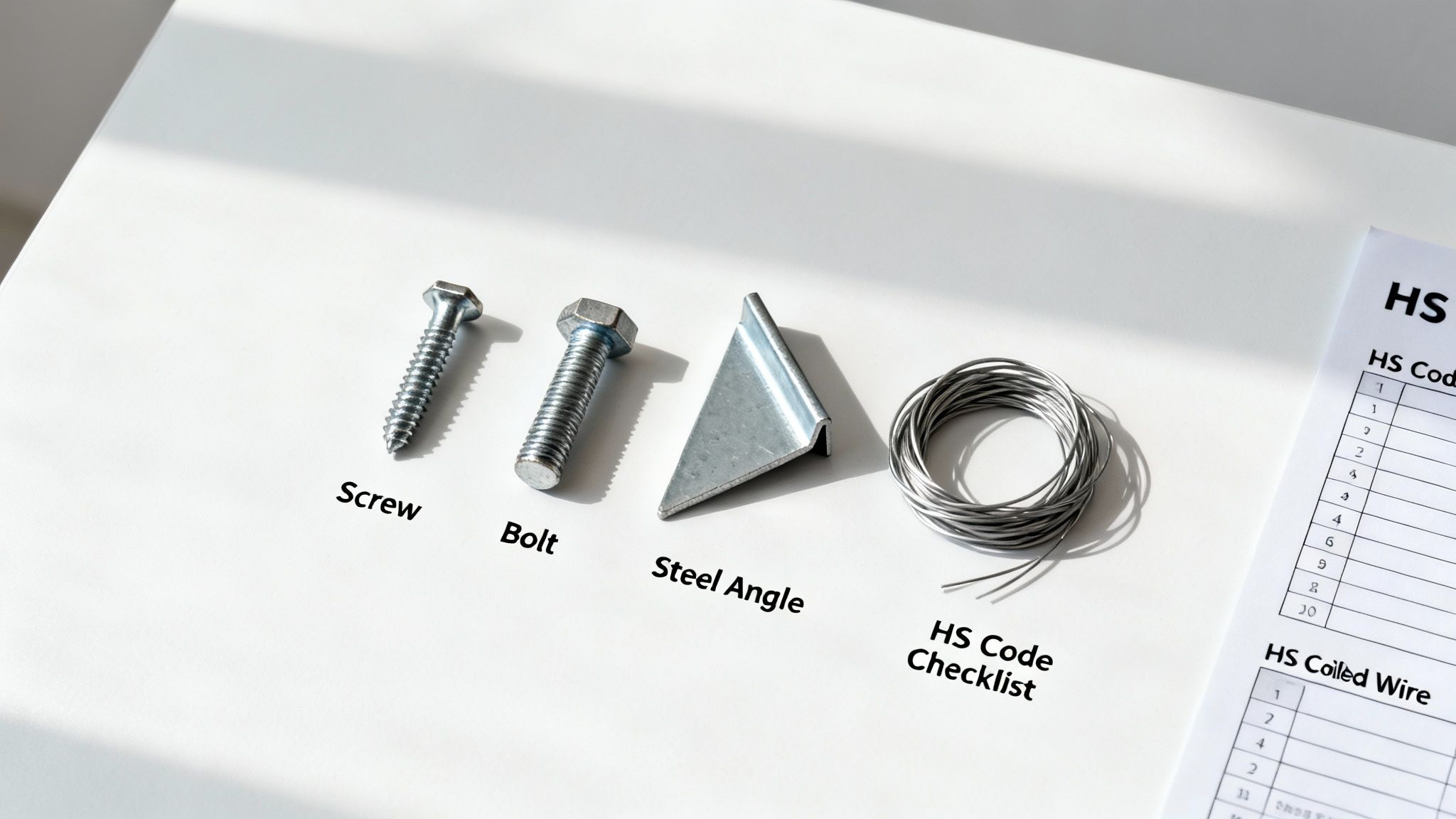
This targeted approach means importers must move beyond general product names and delve into technical specifications. To know with certainty if your goods are impacted, you must understand and correctly apply the appropriate Harmonized Tariff Code. Every product on the official list released by the Department of Finance Canada is identified by its HS code, making tariff classification the most crucial step in assessing your financial liability.
Key Product Categories Affected
The tariffs encompass a range of common industrial and construction materials. While the official list from the Department of Finance Canada is the definitive source, importers should immediately review their inventories for products falling into these categories:
- Fasteners and Hardware: This includes items like nails, tacks, corrugated nails, and staples. It also covers screws, bolts, nuts, and washers made from iron or steel, under HS codes such as 7317.00 and 7318.15.
- Wire, Ropes, and Cables: Products such as stranded wire, ropes, and cables of iron or non-alloy steel are explicitly targeted, falling under HS code 7312.10. If you import these for construction, manufacturing, or rigging, they are likely affected.
- Structural Steel: This category includes angles, shapes, and sections of iron or non-alloy steel (HS code 7216.50), which are fundamental components for building frames and other large-scale construction projects.
- Prefabricated Structures: Larger assemblies, such as prefabricated buildings primarily made of steel, are also included under HS code 9406.90.
The Department of Finance Canada has deliberately selected these goods, focusing on products where steel content is the primary cost driver. You can find the complete, official list of HS codes in the notice titled, “List of steel derivative products subject to 25 per cent tariffs effective December 26, 2025.” Reviewing this document is a non-negotiable step for compliance.
Mastering HS classification is essential. For a foundational understanding of how these codes function and their importance in customs compliance, our guide on what HS codes are is a valuable resource. Correct classification is the bedrock of navigating these new trade regulations without incurring costly errors.
Verifying Your HS Classification for Tariff Compliance
Confirming whether your goods are among the steel derivative products subject to the 25 per cent tariff is not a matter of guesswork. The answer lies in the precise 10-digit Harmonized System (HS) code assigned to each product upon importation into Canada. The Canada Border Services Agency (CBSA) will enforce these new tariffs based on specific HS codes, making accurate classification your most critical compliance task.
Your first action should be a comprehensive audit of your imported products. Move past generic descriptions and gather all technical documentation for your steel-based goods.
This documentation serves as your evidence to substantiate your HS code classifications. Essential documents include:
- Technical Drawings and Schematics: These provide detailed information on a product’s design, material composition, and intended function—all key factors in tariff classification.
- Supplier Product Specifications: These documents often contain crucial details, such as the specific grade and percentage of steel content, which are vital for correct classification.
- Commercial Invoices and Purchase Orders: These should feature clear, accurate product descriptions that align with and support your classification decisions.
How to Verify Your HS Classification
With your documents assembled, the next step is to cross-reference your products against the official list of affected HS codes published by the Department of Finance Canada. This is the only definitive method. A common pitfall for importers is uncritically accepting the HS code provided by an overseas supplier. These codes are frequently outdated or incorrect for Canadian customs purposes, leading to significant and unexpected costs.
An incorrect HS code is a major compliance risk. If the code from your supplier does not match your own verified classification, further investigation is required. Misclassification can result in unexpected tariff assessments, monetary penalties, and disruptive shipment delays at the border.
It is crucial to establish a repeatable, documented process for verifying the HS code of every steel derivative product you import. This due diligence protects your business from the financial shock of a 25 per cent tariff that was not included in your budget. To stay informed about the latest changes to Canadian tariff schedules, be sure to monitor our tariff updates page, where we provide timely information to help you maintain compliance.
The Business Impact for Canadian Importers
These tariffs are not just abstract policy; they translate directly to your company's financial statements. For Canadian businesses importing steel derivative products subject to 25 per cent tariffs, the financial impact is both immediate and significant, compelling a thorough review of everything from product costing to overall business strategy.

The most direct effect is a sharp increase in your landed cost. A 25 per cent surtax is a major expense that can erode or eliminate profit margins. This forces a difficult choice: absorb the cost and reduce profitability, or pass it on to customers and risk losing market share.
Re-evaluating Supply Chains and Pricing
This new cost structure is a strategic challenge that requires immediate action. It's time to engage your finance, procurement, and sales teams to adapt to the new reality.
Key areas demanding your attention include:
- Pricing Strategy: Can your market absorb a price increase? A detailed analysis is needed to determine how much of the tariff cost can be passed on before customers seek alternatives, particularly if competitors have different sourcing arrangements.
- Supplier Diversification: These tariffs may render sourcing from certain countries financially unviable. This provides a strong incentive to explore alternative suppliers in non-tariff countries or to evaluate domestic Canadian producers who are not subject to the surtax.
- Cash Flow Management: A 25 per cent increase in duties means you require more available cash to clear goods through customs. This sudden demand on working capital can strain your finances, especially for small and medium-sized enterprises.
The fundamental challenge is maintaining competitiveness. These tariffs alter the cost of doing business, requiring greater agility and foresight in your financial planning and supply chain management to safeguard your bottom line.
Ultimately, adapting to this new environment involves more than just paying a higher duty. It necessitates a comprehensive review of your import strategy to mitigate financial damage and ensure your business remains resilient in a more challenging trade landscape.
Ways to Soften the Blow of Tariffs and Stay Compliant
Facing a 25 per cent tariff on your steel imports can be daunting, but it doesn't have to be debilitating. By implementing proactive, CBSA-compliant strategies, you can significantly mitigate the financial impact. The objective is not to evade legal obligations but to ensure you pay only what is required by focusing on accuracy and exploring all available customs mechanisms.

This process centers on two foundational pillars of customs compliance: correct valuation and precise HS classification. Overvaluing your goods means you are overpaying duties. An incorrect HS code could result in paying a tariff that should not apply to your product. A comprehensive internal audit is your first and most effective action.
Actionable Mitigation Tactics
To protect your bottom line, it’s time to get practical. Each of these CBSA-compliant steps requires careful documentation and a solid grasp of customs regulations, but the payoff can be huge.
- Audit Your HS Classifications: Never rely solely on your supplier's HS codes. Conduct an independent, thorough review of your steel derivative products subject to 25 per cent tariffs. This process often reveals legitimate opportunities to classify goods under headings that are not subject to these surtaxes.
- Verify Your Customs Valuation: Ensure your declared value for duty is accurate and excludes non-dutiable charges, such as post-importation freight or certain fees. Scrutinizing your transaction values is a direct method to avoid overpaying the 25 per cent tariff.
- Explore Tariff Relief Programs: Investigate whether your goods might qualify for specific remission or duty relief orders. These programs have stringent eligibility criteria, but if your imports qualify, they can eliminate a significant portion of the duty cost.
For a longer-term strategy, consider diversifying your sourcing to countries not impacted by the tariffs or re-engineering products to alter their fundamental classification. While these are larger operational shifts, they can provide a permanent solution to ongoing tariff pressures.
When it comes to managing the financial side of all this, an advanced tool like an AI Finance Tax Document Analyzer can help make sense of the paperwork and ensure your tariff-related tax calculations are accurate. But honestly, navigating these complex rules often requires an expert eye to make sure every decision is not just compliant, but strategically sound.
Common Questions About the New Steel Tariffs
To help you get a better handle on these changes, we’ve tackled some of the most common questions we're hearing from importers about the new tariffs on steel derivative products.
How Do These Tariffs Work With CUSMA?
This is a critical question for just about everyone importing from the U.S. and Mexico. The short answer is: they don't. The 25 per cent tariffs on these specific steel derivatives are applied on top of any other duties.
Even if your goods qualify for duty-free treatment under the Canada-United-States-Mexico Agreement (CUSMA), the 25 per cent surtax will still be charged. Think of it as a separate measure layered over standard customs duties—CUSMA status won’t get you an exemption here.
What Kind of Paperwork Proves a Product Is Exempt?
Proving your product isn't subject to the tariff boils down to one thing: rock-solid HS classification. The best defence is having the right documents to definitively support your chosen 10-digit HS code.
This includes things like:
- Detailed technical drawings that clearly show what the product is made of and how it works.
- Supplier specification sheets confirming the material content, especially the exact grade and percentage of steel.
- A CBSA Advance Ruling on tariff classification, which gives you legal certainty before you ship.
Without airtight proof backing up an HS code that isn't on the government's target list, your goods are at high risk of being reclassified, slapped with the tariff, and delayed at the border.
When Is It Time to Call a Customs Broker?
While a good customs broker is always a valuable partner, there are times when their expertise becomes non-negotiable. You should get a broker involved immediately if:
- You have any uncertainty about the correct HS classification for your products.
- You need to perform a complete audit of your import portfolio to figure out which goods are affected.
- You want to look into more advanced strategies, like applying for a customs ruling or seeing if tariff relief programs are an option.
Trying to navigate the complexities of these new tariffs on your own is a huge risk. A simple mistake in classification or valuation can trigger costly penalties and shipment delays that dwarf the cost of getting professional guidance from the start.
Navigating the complexities of steel derivative products subject to 25 per cent tariffs demands expertise and a proactive approach. The team at J.W. Smith Customs Brokers Ltd. is here to provide the clarity and guidance you need to keep your supply chain moving smoothly and compliantly. Contact us today to ensure your business is prepared.
Need Help with Customs?
J.W. Smith Customs Brokers has over 50 years of experience helping Canadian businesses navigate imports with confidence. Our team of licensed customs brokers is ready to assist with your import and export needs.