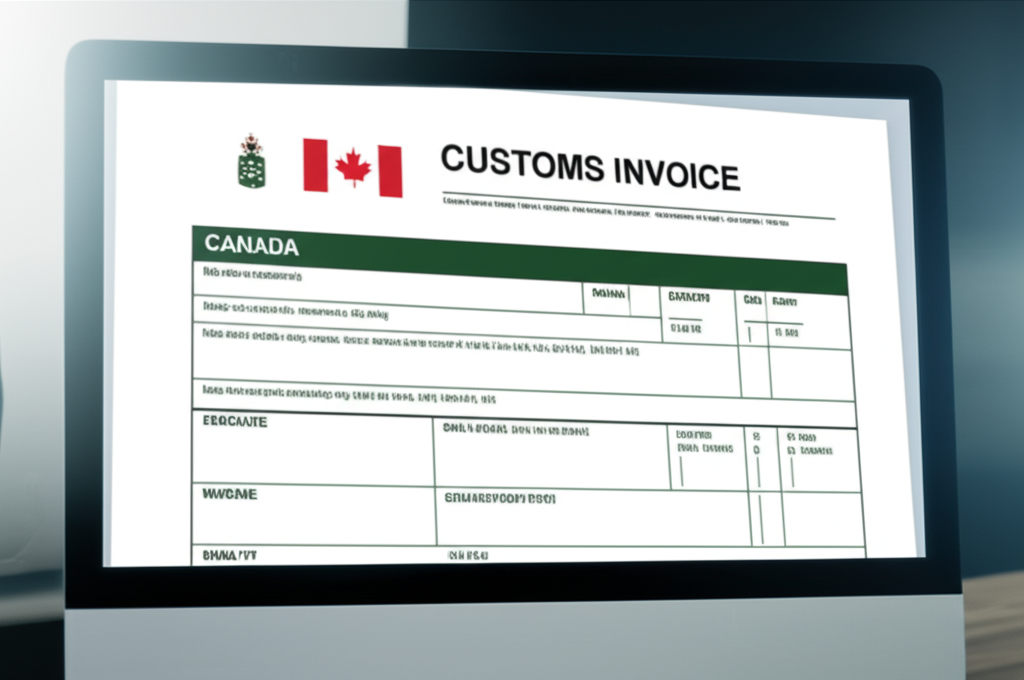
Most Canadian companies face added pressure as even a single mistake on a Canada customs invoice can cost thousands in shipment delays or fines. International trade relies on flawless documentation, yet misunderstandings about customs invoices remain widespread. This article cuts through confusion to reveal what a customs invoice really means, why it is vital for compliance in global business, and what specific details Canadian exporters and importers cannot afford to overlook.
Table of Contents
- Customs Invoice Meaning And Core Purpose
- Key Types Of Customs Invoices Explained
- Canadian Legal Requirements For Customs Invoices
- Critical Information Required On Customs Invoices
- Risks Of Errors And Common Compliance Pitfalls
Key Takeaways
| Point | Details |
|---|---|
| Importance of Customs Invoices | Customs invoices are essential for accurate customs clearance, providing vital information for product classification, valuation, and regulatory compliance. |
| Legal Compliance in Canada | Canadian customs regulations require detailed and accurate customs invoices to avoid penalties, delays, and legal complications in international trade. |
| Risks of Inaccuracies | Errors in customs invoices can lead to significant financial repercussions, prolong shipment times, and damage relationships with customs authorities. |
Customs Invoice Meaning and Core Purpose
A Canadian Customs Invoice is the critical documentation that bridges international trade transactions, serving as the official record for goods crossing national borders. At its core, this document provides customs authorities a comprehensive snapshot of a commercial shipment, enabling accurate classification, valuation, and regulatory compliance.
The primary purpose of a customs invoice extends far beyond a simple transaction record. Customs officials rely on this document to determine several key elements of international trade:
- Precise Product Identification: Detailed description of goods, including product specifications, materials, and intended use
- Accurate Valuation: Complete pricing information to calculate applicable import duties and taxes
Beyond regulatory requirements, a customs invoice serves multiple crucial functions. Accurate shipping documentation helps businesses navigate complex international trade regulations, minimize potential delays, and ensure smooth customs clearance processes.
Unlike standard commercial invoices, customs invoices require specific information mandated by government trade regulations. These documents must include precise details such as harmonized system (HS) codes, exact product weights, country of origin, and transaction terms. Importers and exporters must understand that an incomplete or inaccurate customs invoice can result in shipment holds, potential fines, or significant clearance delays.
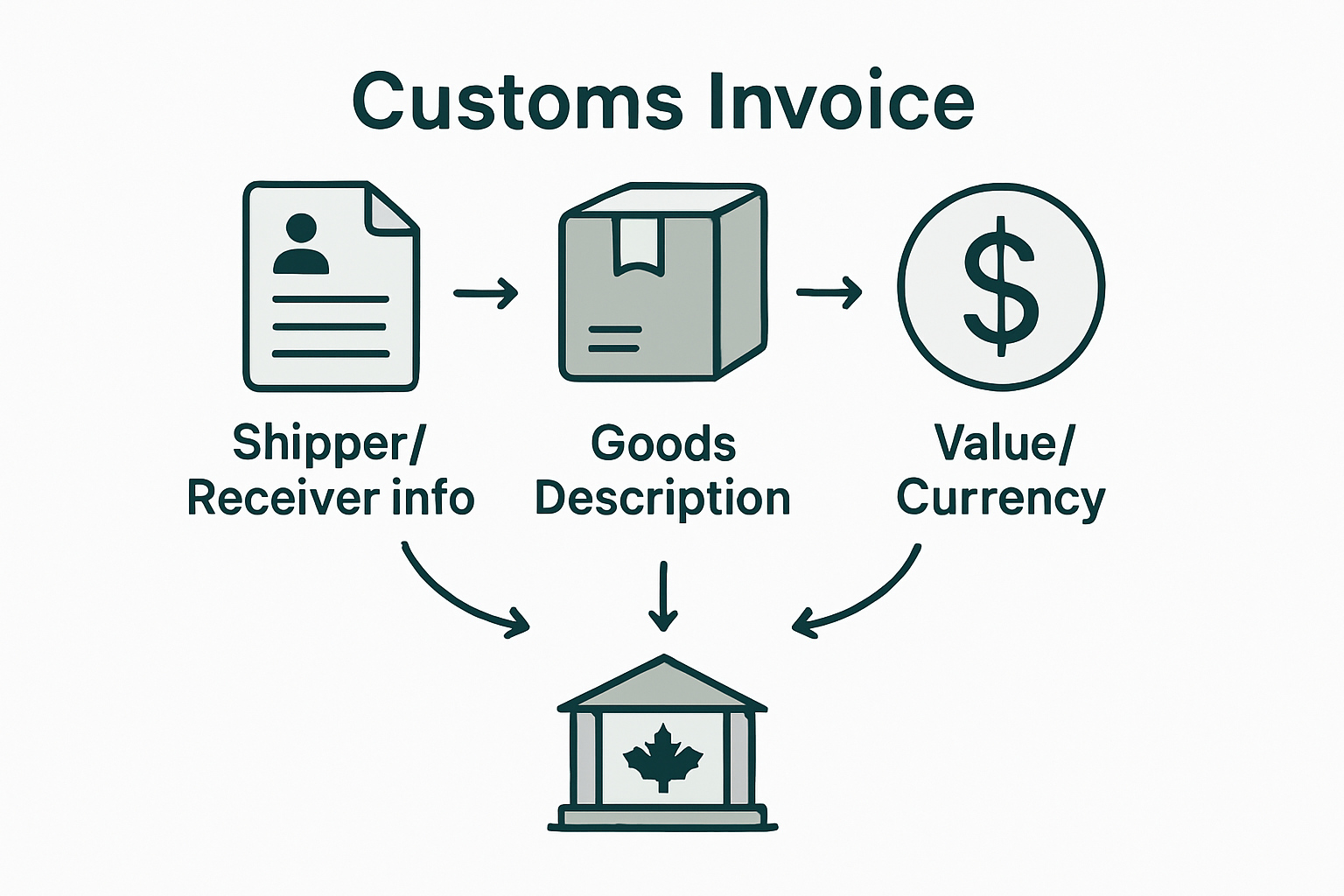
The essential components of a legally compliant Canadian customs invoice include:
- Detailed Product Description: Comprehensive information about goods, including materials, intended use, and precise specifications
- Accurate Valuation: Complete pricing details reflecting the true transaction value
- Harmonized System (HS) Codes: Specific classification codes identifying product categories
- Country of Origin: Clear indication of where products were manufactured
- Shipper and Receiver Information: Complete contact and address details for both parties
Canadian customs tariff guidelines play a critical role in determining the precise documentation requirements for different types of commercial shipments. Importers must understand that incomplete or inaccurate documentation can result in significant penalties, including shipment delays, potential seizures, and substantial financial fines.
Beyond basic documentation, Canadian regulations require additional supporting documents depending on the specific type of goods being imported. Electronic submissions through the CBSA’s systems are increasingly mandatory, with businesses needing to maintain digital records that can be instantly verified. Compliance is not just about paperwork – it’s about creating a transparent, traceable record of international commercial transactions that protects both importers and the national economic interests.
Critical Information Required on Customs Invoices
A comprehensive customs invoice serves as the critical documentation bridge between international traders, requiring meticulous attention to specific informational requirements. Businesses must understand that every detail matters when preparing these essential shipping documents, as incomplete or inaccurate information can result in significant customs processing challenges.
The essential elements that must be included on a customs invoice are:
- Seller and Buyer Details: Complete legal names, addresses, contact information, and tax identification numbers
- Detailed Product Description: Comprehensive specifications including materials, dimensions, weight, and intended use
- Monetary Valuation: Precise transaction value, including currency type and total shipment worth
- Harmonized System (HS) Codes: Specific international product classification codes
- Shipping Terms: Incoterms defining responsibility and cost allocation between parties
- Country of Origin: Clear indication of product manufacturing location
- Destination Control Statement: Regulatory compliance information
Completing a Canada customs invoice requires exporters to provide extraordinary levels of detail to ensure smooth cross-border transactions. Each piece of information serves a critical function in helping customs officials accurately assess duties, verify product compliance, and expedite shipment processing.

Beyond basic transactional details, modern customs invoices must also incorporate digital tracking capabilities and comply with increasingly complex international trade regulations. Businesses must recognize that these documents are not mere paperwork – they are legally binding instruments that directly impact the efficiency and cost-effectiveness of global supply chain operations. Accuracy, comprehensiveness, and clarity are not optional – they are fundamental requirements for successful international trade.
Risks of Errors and Common Compliance Pitfalls
Customs invoice errors can transform a straightforward shipment into a complex, expensive nightmare for businesses engaged in international trade. Compliance mistakes often trigger a cascade of consequences that extend far beyond simple documentation issues, potentially resulting in significant financial penalties, shipping delays, and even legal complications.
The most prevalent compliance pitfalls include:
- Incomplete Product Descriptions: Vague or inadequate details about goods that prevent accurate classification
- Incorrect Valuation: Misreporting the true monetary value of shipments
- Misclassified Harmonized System (HS) Codes: Errors in product categorization leading to incorrect duty assessments
- Missing Supporting Documentation: Lack of required certificates, origin statements, or supplementary paperwork
- Inconsistent Shipper Information: Discrepancies in contact details or legal business names
Customs clearance best practices become critical when navigating the intricate landscape of international shipping regulations. A single overlooked detail can trigger comprehensive inspections, potentially resulting in shipment holds that can cost businesses thousands of dollars in storage fees, re-documentation expenses, and lost market opportunities.
The financial and operational risks extend beyond immediate shipping challenges. Repeated compliance errors can damage a company’s reputation with customs authorities, potentially leading to increased scrutiny, higher inspection rates, and longer-term restrictions on future import and export activities. Businesses must view customs documentation not as an administrative burden, but as a strategic component of their international trade infrastructure – one that requires continuous attention, precision, and proactive management.
Simplify Your Customs Invoicing with Expert Guidance
Understanding the critical role customs invoices play in international trade means knowing that even small errors can lead to costly delays and compliance headaches. Whether you struggle with detailed product descriptions, accurate valuations, or navigating the complex Harmonized System codes, expert help can make all the difference. Avoid shipment holds, fines, and unnecessary stress by relying on a seasoned Canadian customs broker who prioritizes accuracy and compliance.
At J.W. Smith Customs Broker Ltd., we bring over 50 years of experience to your customs paperwork. Our personalized service offers one point of contact to guide you through customs clearance, export documentation, and compliance for your commercial shipments. Ready to take the next step toward hassle-free cross-border trade? Visit Get a Customs Estimate to find out how we can streamline your process. Learn more about customs clearance best practices and discover why partnering with a trusted broker makes a difference. Don’t wait for costly mistakes to happen. Contact us today and ensure your customs invoices meet all Canadian regulations with precision.
Frequently Asked Questions
What is a customs invoice?
A customs invoice is a vital document used in international trade that provides customs authorities with detailed information about the goods being shipped across borders. It serves as an official record of the transaction and is essential for accurate shipment processing, taxation, and regulatory compliance.
Why is a customs invoice important?
A customs invoice is important because it helps customs officials determine product classification, assess import duties and taxes, and ensure compliance with trade regulations. Accurate documentation minimizes delays and facilitates smooth customs clearance for international shipments.
What information is required on a customs invoice?
A customs invoice must include details such as the seller and buyer’s information, detailed product descriptions, monetary valuation, harmonized system (HS) codes, shipping terms, country of origin, and a destination control statement for regulatory compliance.
What are the risks of errors on a customs invoice?
Errors on a customs invoice can lead to significant issues, including shipment delays, financial penalties, and legal complications. Common pitfalls include incomplete product descriptions, incorrect valuations, misclassified HS codes, missing supporting documentation, and inconsistent shipper information.
Recommended
- Canada Customs Invoice (CCI): What to Include | J.W. Smith Customs Brokers
- How to Complete a Canada Customs Invoice | J.W. Smith Customs Brokers
- How to Prepare Shipping Documents for Smooth Customs | J.W. Smith Customs Brokers
- The Importance of Tariff Codes in Customs Clearance | J.W. Smith Customs Brokers
Need Help with Customs?
J.W. Smith Customs Brokers has over 50 years of experience helping Canadian businesses navigate imports with confidence. Our team of licensed customs brokers is ready to assist with your import and export needs.