What Is a Customs Broker and Why Do You Need One?

Trying to make sense of customs paperwork can feel like solving a puzzle where half the pieces are missing. That's where a customs broker comes in. Think of them as your licensed guide through the complex world of international trade—the same way a specialized lawyer would guide you through a complex legal battle.
Your Guide to Seamless Canadian Imports
A customs broker is your official, licensed representative who deals directly with the Canada Border Services Agency (CBSA) on your behalf. Their primary role is to act as your agent, ensuring your goods cross the border legally and on time, without costly surprises. They transform what could be a massive operational headache into a smooth, predictable part of your supply chain.
The need for these experts is growing. While many brokers specialize in certain regions, the core job of facilitating trade is universal. For example, the customs brokerage market in Latin America is expected to hit USD 3.67 billion by 2030, reflecting increasing trade complexities. This trend underscores the vital role brokers play in keeping modern supply chains moving worldwide.
What a Broker Handles for You
A broker manages all the critical details that prevent your shipments from getting stuck at the border. They are responsible for a host of tasks that demand deep regulatory knowledge, pinpoint accuracy, and constant communication.
Here's an actionable look at what they do:
Correctly classifying your products using the Harmonized System (HS) tariff schedule.
Calculating all applicable duties and taxes owed to the Government of Canada.
Managing and submitting all required documentation to the CBSA for clearance.
Advising on compliance issues and helping you leverage trade agreements to lower your costs.
A solid partnership with a customs broker is the bedrock of a strong import strategy. They aren’t just paper-pushers; they are compliance experts who protect your business from the very real financial risks of customs errors, delays, and penalties.
To give you a clearer picture, here’s a breakdown of their primary functions.
Key Roles of a Canadian Customs Broker at a Glance
| Core Responsibility | What This Means for Your Business |
|---|---|
| Tariff Classification | Assigns the correct HS code to your goods, which determines the duty rate you pay. Getting this right is a legal requirement and prevents overpayments and penalties. |
| Duty & Tax Calculation | Accurately calculates GST/HST, duties, and other fees, ensuring you pay the government exactly what you owe—no more, no less. |
| Documentation & Submission | Prepares and submits all necessary forms to CBSA electronically, preventing delays caused by incomplete or incorrect paperwork. |
| Compliance & Advisory | Keeps you updated on changing regulations and trade agreements (like CUSMA), helping you maintain compliance and save money. |
| Liaison with CBSA | Acts as your direct line to border officials, resolving issues and answering inquiries quickly to keep your shipments moving. |
This table highlights just how integral a broker is to the process. They handle the complex, behind-the-scenes work so you can focus on running your business.
Before you bring a customs broker on board, ensure your business is ready. This includes obtaining a Canadian Business Number (BN) and registering for an import-export program account (RM). Getting this sorted out is a critical first step toward importing goods without a hitch.
The Core Services a Customs Broker Provides
Beyond acting as your official agent with the CBSA, what does a customs broker actually do for your business day-to-day? Their work is a mix of deep technical knowledge, precise execution, and strategic advice, all laser-focused on one thing: getting your goods into Canada without costly errors or delays.
Think of their core services as the engine that powers a smooth import process.
At the very heart of their role is Harmonized System (HS) Tariff Classification. This is not just looking up a code. It’s about correctly interpreting your products according to Canada’s complex 10-digit customs tariff schedule. A single digit mistake here can mean paying the wrong duty rate, leading to CBSA penalties or overpayments that silently eat away at your profits.
This process requires expertise. Brokers analyze your product's materials, function, and end-use to assign the one correct HS code. This ensures you pay exactly what you owe—no more, no less.
The infographic below breaks down the essential flow of a broker's core responsibilities, moving from classification to calculation and final documentation.
As you can see, a broker’s work is a structured, logical progression. Each step builds on the last to guarantee you stay fully compliant with CBSA regulations.
Accurate Duty and Tax Calculation
Once the HS code is determined, the broker shifts to Duty and Tax Calculation. They take that classification, combine it with your product's value for duty and country of origin, and calculate the precise duties, GST/HST, and any other taxes that apply. It’s a meticulous process that keeps you compliant with all government revenue requirements.
Their expertise really shines when navigating complex trade agreements. For example, a good broker helps importers take advantage of preferential tariff treatments under agreements like CUSMA, which can significantly reduce or even eliminate duties on qualifying goods. This advisory role directly protects your bottom line by ensuring you aren't leaving money on the table.
This service has a huge global impact; brokers are key in tracking preferential tariffs that can save importers money. This kind of expertise is crucial for managing the tangled web of trade regulations. To get a better sense of the financial impact, it’s worth reviewing recent trade data insights.
Release, Accounting, and Compliance
Finally, your broker handles the Release and Accounting process with the CBSA. They prepare and electronically submit all the necessary release data to get your goods cleared as efficiently as possible upon arrival at the border.
A licensed customs broker’s main job is to achieve clearance in the shortest time possible while guaranteeing absolute compliance. This dual focus on speed and accuracy is what prevents shipments from turning into costly liabilities stuck at the border.
After your goods are released, the broker files the final accounting declaration, officially known as the B3-3 Canada Customs Coding Form. This document provides the CBSA with a detailed breakdown of the entire import transaction for final revenue assessment and must be submitted within a prescribed timeframe.
Throughout this entire journey, their advisory role is constant. They’re there to help you navigate permit requirements and maintain a strong compliance record with Canadian authorities.
Getting to Grips with Canadian Customs
Importing into Canada isn't just about getting goods across the line; it's about adhering to a specific regulatory framework. The system has its own language and a unique set of requirements that can trip up even experienced importers. A good customs broker does more than just file papers—they’re your guide through these critical concepts, ensuring your business stays compliant and your shipments don't get stuck.
CARM: The New Digital Gateway
At the heart of modern Canadian importing is the CBSA Assessment and Revenue Management (CARM) portal. This is the government's mandatory digital hub for managing all customs-related activities. For importers, using CARM is non-negotiable. It’s where you will manage payments, view your statement of account, and officially delegate authority to your broker to act on your behalf.
The transition to this digital-first system can feel overwhelming, but a broker’s job is to make it straightforward. They'll guide you through the registration process and help you manage your account. If you want to get into the details, we've put together a detailed guide on what CARM means for your business.
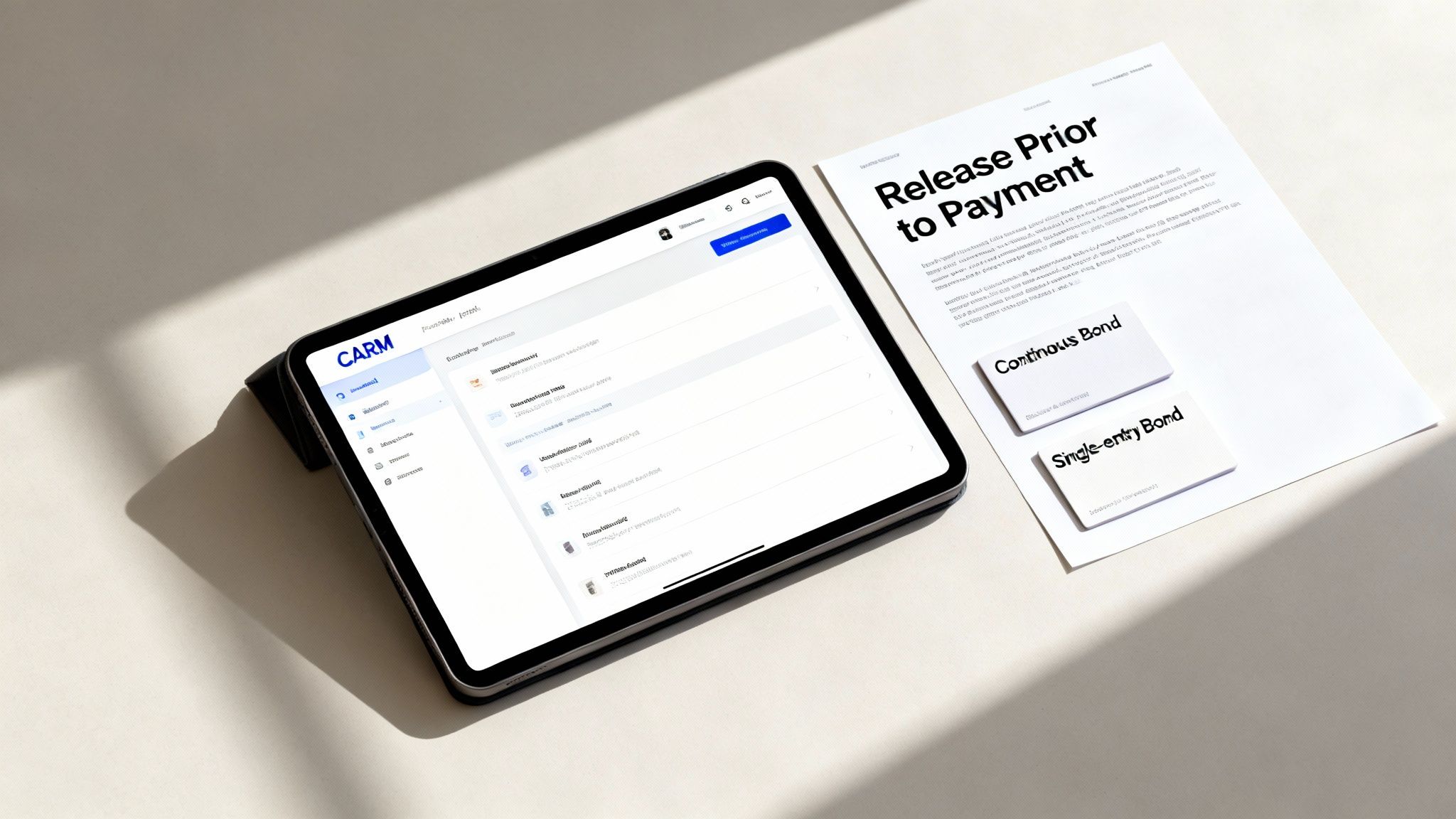
The CARM portal is now the primary interface for dealing with the CBSA, centralizing everything from your statements of account to direct payments. This shift means importers are more directly responsible for their own compliance, and a broker helps manage that responsibility.
The Deal with Customs Bonds
One of the biggest changes CARM brought in is the mandatory requirement for importers to post their own financial security to participate in the Release Prior to Payment (RPP) program. RPP is a huge deal—it lets your goods clear customs before you've paid the duties and taxes, which is absolutely essential for maintaining supply chain velocity. This financial security comes in the form of a customs bond.
Your customs broker will help you determine the most suitable bond for your business:
Continuous Bond: This is the go-to for most regular importers. It covers all shipments imported over a one-year period and is renewed annually. If you have a steady stream of imports, it's easily the most cost-effective option.
Single-Entry Bond: This is for importers who only ship occasionally or have a one-off, high-value shipment. It works perfectly for a single transaction, but it becomes expensive quickly if you start importing more frequently.
Choosing the right bond isn't just paperwork; it's a financial strategy. Your broker will analyze your import volume and duty/tax liabilities to help you pick the most economical option. This simple step can save you a lot of money and ensures you’re fully compliant with CBSA’s financial security rules.
Selling to Canada? The Non-Resident Importer Program is Key
For U.S. and other foreign businesses looking to sell to Canadian customers, the Non-Resident Importer (NRI) program is a game-changer. An NRI is a company located outside of Canada that acts as the importer of record for goods sold into the country.
By becoming an NRI, a foreign company can handle everything—clearing goods through customs, paying all Canadian duties and taxes, and selling directly to Canadian customers in Canadian dollars. This creates a seamless, "local" buying experience, as your Canadian customers no longer face surprise bills for duties and taxes. A customs broker is indispensable here, managing all CBSA communications and ensuring you remain compliant every step of the way.
Finally, think of your broker as your first line of defence in a CBSA audit. They keep meticulous records of all your import activities for the required retention period. This creates a clear, organized paper trail that proves you've done your due diligence, protecting your business from potential penalties down the road.
Customs Broker vs Freight Forwarder Clarifying the Roles
It’s one of the most common points of confusion for anyone new to importing: who handles what in the logistics chain? While their roles often overlap and many companies offer both services, a customs broker and a freight forwarder have fundamentally different jobs.
Getting this distinction right is crucial for building an efficient supply chain and knowing exactly who to call when issues arise.
Think of it this way: your freight forwarder is the travel agent for your cargo. Their main job is to manage the physical transportation of your goods. They’ll book space on a ship, plane, or truck, handle warehousing, and coordinate the entire journey from the supplier to the destination. They are experts in logistics and movement.
Your customs broker, on the other hand, is the legal representative for your cargo's entry into Canada. Their focus isn’t the physical journey, but the legal entry of your goods. Licensed directly by the CBSA, they are experts in navigating the complicated world of trade regulations, tariffs, and taxes.
Comparing Key Responsibilities
To draw a clearer line, let's look at what each one actually does. A freight forwarder works with carriers and maps out routes, while a customs broker deals exclusively with government agencies like the CBSA.
A freight forwarder gets your goods to the border; a customs broker gets your goods across the border. This simple distinction clarifies their unique and complementary roles in international trade.
The table below breaks down their core functions side-by-side, helping you see where one role ends and the other begins.
Customs Broker vs Freight Forwarder Key Differences
| Aspect | Customs Broker | Freight Forwarder |
|---|---|---|
| Primary Goal | Legal and regulatory compliance for border crossing. | Efficient and cost-effective physical movement of goods. |
| Main Expertise | Tariff classification, duty calculation, customs law. | Logistics, transportation modes, carrier negotiation. |
| Licensing | Licensed by the Canada Border Services Agency (CBSA). | No government licensing required to operate in Canada. |
| Key Documents | B3-3 Canada Customs Coding Form, Commercial Invoice. | Bill of Lading, Air Waybill, Carrier Booking Confirmations. |
Ultimately, you need both. These two roles aren't competitors; they are essential partners in your success. Your freight forwarder ensures your shipment arrives on schedule, and your customs broker makes sure it clears without getting tangled up in compliance issues. Together, they create a seamless, end-to-end import experience.
How to Choose the Right Customs Broker in Canada
Picking a customs broker is one of the most critical partnerships your import business will make. The right partner becomes a seamless extension of your team, while the wrong one can lead to costly delays and compliance headaches. It all starts with getting a clear picture of what your business actually needs.
Start by evaluating your operations. How often do you ship? Are your products straightforward, or are they complex goods requiring special permits or certifications? Do you import through a single port of entry, or do your shipments land across Canada? Answering these questions helps you build a profile of your ideal brokerage partner.
Key Questions to Ask Potential Brokers
Once you’ve shortlisted potential brokers, it’s time to ask detailed questions. Treat this process like hiring for a vital role in your company—because that's what it is. A transparent, knowledgeable broker will welcome your questions and provide clear, confident answers.
Here’s a practical checklist to guide your conversations:
Fee Structure: "Can you provide a complete fee schedule? Are there extra charges for disbursements, after-hours service, or corrections?" A reputable broker will have no problem giving you a transparent breakdown of every potential cost.
Industry Expertise: "Do you have experience clearing goods in my specific industry, such as automotive, textiles, or food products?" Niche knowledge is priceless, especially for complex classifications.
CARM Support: "How are you actively helping your clients with CARM registration, delegation, and bond management?" This question reveals their preparedness for modern customs compliance.
Technology and Visibility: "What online portal or technology do you offer for tracking shipments and accessing documents?" In today's market, real-time visibility isn’t a luxury—it's a necessity.
Communication Style: "Who will be my dedicated point of contact, and what is your typical response time?" You need a responsive partner, not a faceless call centre.
For a more exhaustive list of evaluation criteria, you can explore our in-depth article on how to choose the right customs broker for your business.
Formalizing the Partnership
After you've made your choice, the next step is to legally authorize your new broker to act on your behalf with the CBSA. This is a crucial step that makes your working relationship official and ensures their actions are legally sanctioned.
This authorization is not just a formality; it’s a legal instrument that transfers significant responsibility. It's the foundation of the trust you place in your broker to represent your business's interests with government authorities.
The process boils down to signing two key documents:
General Agency Agreement (GAA): This is the main contract that outlines the terms of service, responsibilities, and liabilities between your business and the brokerage.
Power of Attorney (POA): This is the specific legal document that grants the customs broker the authority to sign customs-related documents for your company as your official agent.
By carefully evaluating your needs, asking the right questions, and properly formalizing the relationship, you can find a customs broker who isn't just a vendor, but a true strategic partner in your success.
The Strategic Benefits of a Strong Broker Partnership
Think of your customs broker as more than just a service provider—they're a strategic partner. This shift in mindset is where you unlock serious business advantages. A strong partnership goes beyond simple transactions; it becomes a core piece of your operational strategy, protecting your business from risk and making everything run smoother.
Right off the bat, the biggest benefit is maintaining flawless CBSA compliance. Mistakes in customs paperwork aren't minor admin errors. They can lead to significant monetary penalties, seized shipments, and delays that disrupt your entire supply chain. A good broker is your first line of defence, ensuring every declaration is accurate.
But it goes deeper than that. An experienced customs broker is a huge asset to your overall supply chain risk management strategies. They help you anticipate challenges, navigate potential disruptions, and sidestep costly errors before they happen. They essentially become an extension of your team, dedicated to keeping your operations predictable and secure.
Unlocking Efficiency and Cost Savings
Delegating complex administrative tasks to a broker frees up an incredible amount of time. Instead of your team getting bogged down deciphering tariff schedules or wrestling with CARM requirements, they can focus on what they do best—growing the business and serving customers. That saved time contributes directly to your bottom line through improved productivity.
A skilled broker also actively looks for ways to lower your costs. Their expertise in tariff classification and trade agreements ensures you’re paying the correct—and lowest possible—duty rates every time. For a deeper dive, check out our guide on how a customs broker can help you save time and money.
Ultimately, the greatest benefit a customs broker provides is peace of mind. Knowing a licensed expert is managing your compliance allows you to operate with confidence, secure in the knowledge that your international shipments are in capable hands.
Investing in a professional brokerage service isn't just an expense; it's a direct investment in the long-term health and compliance of your business. It's how you ensure your supply chain stays resilient, efficient, and profitable for years to come.
Frequently Asked Questions About Customs Brokers
When you're navigating the world of importing, a lot of questions pop up. Here are some quick, clear answers to the most common things importers ask about customs brokers and how they can help a business succeed in Canada.
Do I Legally Need a Customs Broker?
While it is not legally mandatory to hire a customs broker—importers can self-clear their goods—it is highly recommended for almost every commercial importer. The Canadian customs process is a minefield of complexity, packed with precise tariff codes, strict valuation rules, and exacting paperwork.
A simple mistake can lead to costly delays, CBSA penalties, or even the seizure of your shipment. For most businesses, a licensed broker's expertise isn't just a service; it's a critical investment to keep imports compliant and moving smoothly.
How Much Does a Customs Broker Cost?
The cost varies depending on the brokerage, the complexity of your shipments, and your import volume.
You'll typically see a few common fee structures:
A flat fee per customs entry.
A fee based on the value of the goods.
A monthly retainer for high-volume, regular importers.
You should also plan for other charges such as bond fees, disbursements for duties and taxes, and any specialized services you might need, like permit applications. Best practice is to always request a detailed fee schedule upfront to avoid surprises.
What Documents Does My Broker Need?
To clear a shipment, your broker will need a Canada Customs Invoice (or a detailed Commercial Invoice), a Bill of Lading (or other transport document), and a packing list. Depending on your goods, a certificate of origin (e.g., for CUSMA benefits) or specific permits may also be required.
Most importantly, to establish a relationship, you will need to sign a General Agency Agreement (GAA). This document grants your broker Power of Attorney, which is the legal authority they need to act on your behalf with the CBSA.
Can My Broker Help with CARM?
Absolutely. This is now a core service for any reputable Canadian customs broker. Think of them as your essential partner for everything related to the CBSA Assessment and Revenue Management portal.
A good broker will guide you through the entire registration process, help you delegate the necessary authority to them within the CARM portal, and provide advice on securing the mandatory Release Prior to Payment (RPP) financial security bond.
Navigating Canadian customs doesn't have to be a roadblock for your business. With over 50 years of experience, J.W. Smith Customs Brokers Ltd. provides the expert guidance and reliable execution needed to keep your supply chain moving. Clear your next shipment with confidence.
Article created using Outrank
Need Help with Customs?
J.W. Smith Customs Brokers has over 50 years of experience helping Canadian businesses navigate imports with confidence. Our team of licensed customs brokers is ready to assist with your import and export needs.