What Is a Customs Examination? A Guide for Canadian Importers

A customs examination is when the Canada Border Services Agency (CBSA) decides your incoming shipment needs a closer look. The goal is simple: to make sure everything you've declared—from the product description and quantity to its value—is 100% accurate and that your goods are safe and legal to enter Canada.
Think of it less as a scary audit and more like the security check your luggage goes through at the airport, but for commercial cargo. It's a standard part of the import process, but one you definitely want to avoid.
Your Guide to Navigating a CBSA Examination
Getting a notice that your shipment is flagged for a customs examination can be stressful. It’s easy to picture your valuable cargo being held up for weeks, all while racking up unexpected storage fees. You're not wrong to be concerned, but panic isn't a strategy.
The reality is usually less dramatic. An exam doesn’t automatically mean you’ve done something wrong. Shipments get picked for all sorts of reasons, from targeted risk assessments based on the type of goods to completely random checks. The CBSA can't inspect everything, so they use a system of red flags to decide where to focus their attention.
The trick is to understand what triggers these inspections and how to prepare your shipments to be as low-risk as possible. A shipment with flawless, organized paperwork is far less likely to get a second look from a CBSA officer.
Why Do Examinations Happen?
At its core, the CBSA's job is to protect Canada's borders and ensure everything coming in follows our laws. Examinations are simply one of the tools they use to do that. They aren't trying to ruin your day; they're trying to keep the playing field fair and safe.
The main reasons for an inspection boil down to a few key goals:
- Security: To stop prohibited items like weapons, drugs, and other contraband from ever making it into the country.
- Compliance: To check that goods are classified with the correct HS Code and that the declared value is right, so the proper duties and taxes are paid. No free rides.
- Health and Safety: To make sure products meet Canadian standards, protecting everyone from unsafe or hazardous materials.
While we often think of exams in the context of commercial goods, they apply to other imports, too. For example, there are very specific customs requirements for importing pets into Canada to protect animal health and public safety.
The goal isn’t to create delays; it’s to maintain a fair and secure playing field for everyone in trade. When you see an examination as just part of the system, not a punishment, you can focus on what you can control: submitting perfect paperwork and working with a customs broker who puts compliance first.
Understanding what an examination is and why it happens is the first step toward minimizing your risk. Proactive preparation and a commitment to accuracy are your best defences against costly delays at the border, helping you keep your supply chain running without a hitch.
The Three Levels of CBSA Scrutiny Explained
When the Canada Border Services Agency (CBSA) flags your shipment, it doesn't automatically mean a full-scale, gloves-on inspection. A customs examination actually happens at three distinct levels, each with its own process and potential impact on your business.
Think of it as a tiered system. Understanding these levels is key to figuring out what's happening when your shipment gets held up. More importantly, it shows why having your paperwork airtight is the best defence against deeper, more expensive inspections.
This diagram breaks down the typical flow of a customs examination, starting with the least invasive check and escalating only when necessary.
As you can see, every inspection starts with the documents. It’s usually inconsistencies or red flags here that trigger a more hands-on approach.
Level 1: Documentary Examination – The Paperwork Check
The most common type of inspection is the Documentary Examination, often just called a "doc check." In this scenario, a CBSA officer acts like a meticulous accountant reviewing your homework. They never even see your goods; their entire focus is on the customs declaration and supporting documents.
The officer pores over your commercial invoice, bill of lading, and other paperwork, cross-referencing every detail. They’re looking for consistency, accuracy, and just plain common sense.
Here’s what they’re scanning for:
- Logical Valuation: Does the declared value of your goods seem reasonable? Declaring a full container of brand-new electronics at $500 is a massive red flag that screams "undervaluation."
- Correct HS Classification: Does the Harmonized System (HS) code you've used actually match the detailed goods description? A mismatch here is one of the quickest ways to earn your shipment extra attention.
- Complete Information: Are all the required fields filled out properly? Vague descriptions like "machine parts" instead of "100 units of automotive steel bolts, model #A54" are almost guaranteed to invite more questions.
If everything lines up perfectly, your shipment gets released without any physical delay. But if even one detail seems off, the CBSA might bump the inspection up to the next level.
Level 2: Non-Intrusive Inspection – The X-Ray Scan
If the paperwork raises a few eyebrows or if your shipment is flagged by the CBSA's risk-assessment system, it may move on to a Non-Intrusive Inspection (NII). This is basically the customs version of an airport luggage scanner, but on a much larger scale. Your entire shipping container or truck is passed through a massive X-ray or gamma-ray machine.
This technology gives officers a look inside your shipment without having to physically crack it open. The goal is simple: verify that what's inside matches what's on the manifest.
A non-intrusive scan is all about verification. The CBSA is looking for anomalies—unexpected shapes, densities, or quantities that don't match what's declared on the paperwork. It’s a fast and effective way to spot everything from undeclared goods to potential contraband.
This process is relatively quick, but it's not without consequences. Your container has to be moved to a special examination area, which can add a day or two to your timeline and will definitely come with drayage and handling fees.
Level 3: Physical Examination – The Full Unpacking
The most intensive, time-consuming, and expensive inspection is the Physical Examination. This is the one every importer dreads. This level of scrutiny is usually triggered by a suspicious X-ray scan, major problems with your paperwork, or intelligence that flags the shipment as high-risk.
During a physical exam, your container is trucked to a CBSA examination facility, the seal is broken, and officers physically unload your goods. They might just open a few boxes for a spot check or, in a worst-case scenario, unpack the entire container.
Given the sheer volume of trade—the CBSA processed over 24.8 million commercial releases and 127 million courier shipments in a single year—it's clear why they rely on a targeted inspection approach. You can learn more about the CBSA's operational volume to see why random checks are simply not feasible.
The CBSA is digging for:
- Quantity Discrepancies: Did you declare 1,000 units, but there are actually 1,200?
- Product Authenticity: Are the goods what you claim they are?
- Marking and Labelling: Do the products meet all Canadian import requirements?
- Contraband: Is there anything illegal hidden among the legitimate cargo?
Once the inspection is done, the goods are reloaded. However, the importer is on the hook for all the costs—transport to and from the facility, labour for unloading and reloading, and warehouse fees. A physical exam can easily tack on several days, sometimes even weeks, to your delivery schedule and add hundreds, if not thousands, of dollars to your import costs.
Common Red Flags That Trigger a Customs Examination
The Canada Border Services Agency (CBSA) doesn’t just pull containers aside for fun; they have a sophisticated risk-assessment system that flags shipments for a closer look. Think of it like a credit score for your cargo—certain actions raise your risk profile, making an examination far more likely. Understanding these triggers is the first step to staying off their radar.
Most of the time, an inspection isn't the result of one single, catastrophic error. It’s usually a combination of smaller, avoidable mistakes that add up and make a customs officer suspicious. Your goal is to make your shipment look as boring and predictable as possible.
Inaccurate or Vague Paperwork
This is the number one reason shipments get flagged. If your documents are sloppy, incomplete, or just don’t make sense, you’re practically asking for a customs examination. The CBSA wants crystal-clear information that leaves zero room for interpretation.
Here are the most common paperwork pitfalls:
- Vague Goods Descriptions: Declaring a pallet of "parts" or "samples" is a classic red flag. Be specific. Instead of "auto parts," write "150 units of passenger vehicle brake pads, Model #BR-784."
- Mismatched Information: The details on your commercial invoice, bill of lading, and packing slip must align perfectly. If one document says you have 10 boxes and another says 12, it creates suspicion.
- Incomplete Data: Missing information, like the country of origin or the full address of the manufacturer, forces an officer to dig deeper. Every blank field is a potential question mark.
HS Code and Valuation Errors
Your Harmonized System (HS) code and the declared value of your goods are two of the most scrutinized elements on your customs declaration. Getting them wrong is like putting the wrong postal code on a package and expecting it to arrive on time. It signals to the CBSA that you either don't know what you're doing or are actively trying to pay less duty.
A suspiciously low valuation is one of the easiest red flags for the CBSA to spot. Declaring a shipment of brand-new flagship smartphones for $50 each will trigger an immediate review. Officers have access to extensive databases of fair market values for countless products.
Likewise, using an incorrect HS code can have serious consequences. Classifying a dutiable item under a duty-free code to save money is a compliance gamble that rarely pays off. More often than not, it leads to an examination, back duties, and financial penalties.
High-Risk Commodities and Origins
Some goods and shipping routes are simply under more scrutiny than others. This isn't personal; it's based on data and security priorities. If you import these types of products, you need to be extra diligent with your compliance.
Common High-Risk Factors:
- Regulated Goods: Items that fall under the watch of other government departments, such as food (CFIA), electronics (ISED), or natural health products (Health Canada), are inherently more likely to be inspected.
- Goods Subject to Anti-Dumping Duties: Products like steel, certain furniture, and specific industrial goods have trade protections in place. The CBSA watches these imports closely to ensure duties are paid correctly.
- Shipments from High-Risk Countries: Shipments originating from or transiting through countries known for counterfeit goods, security threats, or trade compliance issues will naturally get a higher level of attention.
Poor Shipper or Importer History
Your reputation matters. The CBSA maintains a compliance history for every single importer and exporter. If you or your supplier have a track record of customs issues—like previous valuation errors, misclassifications, or contraband discoveries—your future shipments are far more likely to get flagged.
This means that even if your current shipment's paperwork is perfect, a history of non-compliance can put you in the "frequent flyer" program for customs examinations. The best way to avoid this is to build a history of flawless declarations, one shipment at a time. Partnering with a meticulous customs broker is your best strategy for building and maintaining a stellar compliance record.
What Happens When Your Shipment Is Flagged for Inspection
So, your shipment got the golden ticket. A notice has arrived, and it's been selected for a customs examination. This is the moment where having a calm, responsive customs broker is worth its weight in gold. While it feels stressful, the process itself is structured and predictable.
Let's walk through the journey your goods will take, step by step, from the moment they're flagged to when they're finally (hopefully) released. Understanding this path demystifies the process and shows you exactly where potential delays can pop up.
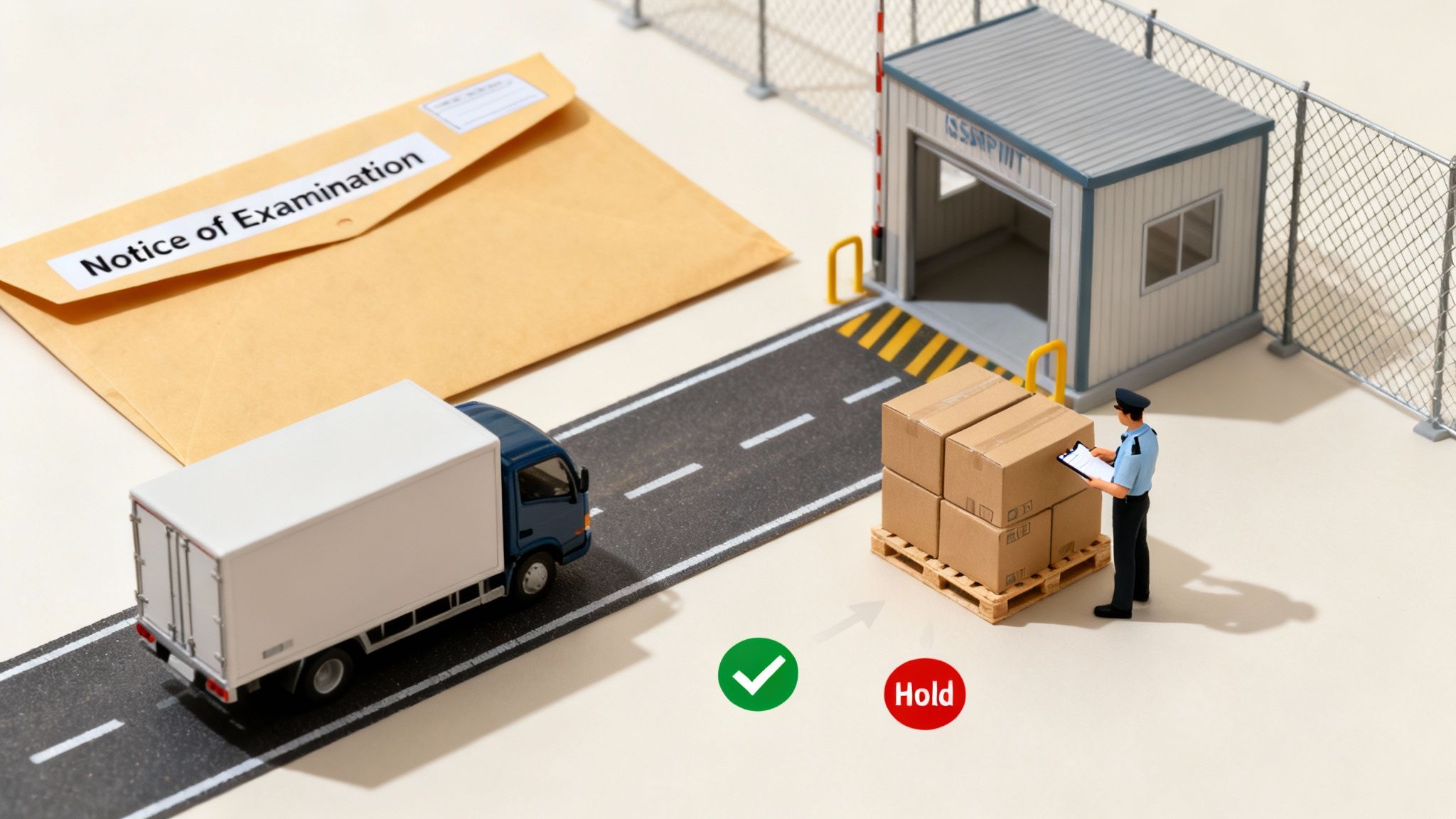
Step 1: The Notice of Examination Arrives
The first thing that happens is a formal notification from the Canada Border Services Agency (CBSA). This isn't a vague email; it’s an official "Notice of Examination" sent directly to your customs broker. It essentially says, "We need to take a closer look at this shipment."
This notice is the starting pistol. Your broker immediately gets to work, coordinating with the carrier and the terminal to arrange the next steps. This is where a proactive broker shines, making sure there are no administrative delays on your end.
Step 2: Moving to an Examination Facility
Your shipment doesn't stay at the port of arrival. It has to be transported to a designated CBSA examination facility or a bonded sufferance warehouse. This process, known as drayage, is the first real delay and cost you'll encounter.
The carrier will move your container to the specified location, and you, the importer, are responsible for that bill. It's a non-negotiable step in the inspection journey.
Think of your customs broker as your shipment's lawyer and logistics coordinator rolled into one. They are your single point of contact, managing communications between the carrier, the warehouse, and the CBSA, ensuring everyone has what they need to keep the process moving.
The moment your shipment arrives at the facility, it's placed in a queue. Depending on how busy the warehouse is, it could be inspected that day or have to wait its turn.
Step 3: The Inspection Takes Place
This is the main event. CBSA officers will conduct whatever type of examination they've deemed necessary, whether that's an X-ray scan or a full physical unpacking. You and your broker are typically not present for the inspection itself.
The officers are methodical. They check your goods against the commercial invoice and packing list you provided, verifying a few key things:
- Quantity: Does the number of items in the boxes match the number on the paperwork?
- Description: Are the goods exactly what you said they were?
- Marking and Labelling: Do your products meet Canadian regulations for bilingual labelling, country of origin marking, and any other specific requirements?
- Compliance: Is everything legal, safe, and correctly declared?
The accuracy of your initial submission is absolutely critical here. If you need a refresher, our guide on how to prepare shipping documents for smooth customs clearance is a great place to start. Perfect paperwork can make this stage much smoother.
Step 4: The Verdict and Potential Outcomes
Once the CBSA has completed its review, one of several things will happen. The outcome depends entirely on what they find.
Possible Outcomes:
- Clean Release: This is the best-case scenario. The officers find that everything is exactly as declared and release the shipment. Your goods are reloaded, and you can arrange for final delivery, minus the time and money spent on the exam.
- Request for More Information: The officers might have questions about valuation or classification. Your broker will be contacted to provide more documents or clarification to justify your declaration.
- Duty and Tax Adjustments: If the CBSA decides you used the wrong HS code or undervalued your goods, they'll issue a Detailed Adjustment Statement (DAS). You'll have to pay the additional duties and taxes owed, and potentially penalties, before your goods are released.
- Seizure: This is the worst-case scenario and is reserved for serious infractions. If prohibited goods are found, or if there's evidence of deliberate fraud, the CBSA can seize the entire shipment.
Throughout this entire process, your customs broker acts as your advocate, working to resolve issues quickly and keep you informed. Their expertise is vital in managing the twists and turns of a customs examination, minimizing the headache and uncertainty for you.
The True Cost of a Customs Examination: More Than Just an Invoice
Getting that notice for a customs examination hits your business in two places it hurts the most: your schedule and your wallet. The official notification doesn't come with an itemized bill, but the costs start adding up the second your shipment gets pulled from the line.
The first hard lesson for many importers is that they are on the hook for 100% of the costs tied to the examination. The Canada Border Services Agency (CBSA) performs the inspection, but you—the importer—pay for every single step required to make it happen.
Breaking Down the Direct Costs
The first bill you’ll see covers the direct handling of your goods. These fees aren't up for negotiation and have to be paid before your cargo is ever released.
- Drayage Fees: Think of this as an unplanned taxi ride for your container. You're charged for trucking your container from the port or terminal to a designated CBSA examination facility, and then all the way back again.
- Warehouse Handling: Once it arrives at the facility, your container has to be unloaded (destuffed) so the CBSA can access the goods. When the exam is done, it has to be reloaded (restuffed). You’re paying for the labour for both.
- Examination Fees: The warehouse itself charges a fee for using their space and services during the inspection.
These direct costs can run anywhere from a few hundred to several thousand dollars. It all depends on the type of exam and the size of your shipment. A quick X-ray scan is one thing; a full physical destuffing of a 40-foot container is a whole different financial story.
A customs examination is one of those times when you learn the hard way that "free time" at the port isn't really free. Once that clock runs out, the charges start piling up, turning a manageable situation into a financial headache.
The Ripple Effect: Indirect Costs and Delays
If only it stopped at the direct fees. The delays caused by an examination create a domino effect of secondary costs that can be even more damaging to your bottom line. While your container is tied up in customs limbo, the clock is still ticking everywhere else.
One often overlooked expense is when foreign-language documents require translation for CBSA officers. Understanding the real cost to translate documents can help you budget for unexpected compliance needs that pop up during an inspection.
This single delay can trigger a cascade of other expensive problems:
- Demurrage and Detention: Shipping lines and terminals give you a set number of "free days" to pick up your container and return it. An exam can easily blow past this window, sticking you with daily penalties which can easily run $100 to $200+ per day.
- Missed Delivery Deadlines: The promises you made to your customers are now at risk. Failing to deliver on time hurts your reputation, can lead to cancelled orders, and may even trigger financial penalties from big-box retailers.
- Product Damage: While professionals handle the unloading and reloading, every time your goods are handled, there’s an increased risk of damage to products or packaging. That potential loss falls squarely on your shoulders.
- Bonding Implications: Frequent exams or compliance slip-ups can tarnish your risk profile with customs. This may lead to requirements for higher-value security deposits, like those you need when you learn more about securing a customs bond for your imports.
To give you a clearer picture, here’s a breakdown of what you might be facing.
Estimated Costs and Delays per Examination Type
The financial and time impacts of an inspection vary wildly depending on how deep the CBSA decides to dig. A simple document check is a minor hiccup, but a full-blown physical exam can derail your entire logistics plan for weeks. This table lays out the potential fallout.
| Examination Type | Estimated Cost Range (CAD) | Potential Delay (Business Days) | Who Pays |
|---|---|---|---|
| Documentary Review | $50 - $250 | 1 - 3 | Importer |
| X-Ray / VACIS | $300 - $700 | 2 - 5 | Importer |
| Physical (Tailgate) | $500 - $1,500 | 3 - 7 | Importer |
| Physical (Full Destuff) | $1,500 - $5,000+ | 5 - 15+ | Importer |
Keep in mind, these are just estimates. A complex shipment, a busy port, or other complications can push these numbers even higher.
The real cost of a customs examination goes far beyond that first invoice. It's a painful mix of direct fees, carrier penalties, and potential business losses that can eat into your profits. This is exactly why investing in proactive compliance isn't just about following the rules—it's one of the smartest financial moves an importer can make.
How to Proactively Reduce Your Examination Risk
Waiting for your shipment to clear customs can feel like a game of chance, but it doesn’t have to be. While you can't eliminate the risk of an examination entirely—random checks are always a possibility—you can definitely stack the odds in your favour. The goal is to make your shipments so clean and compliant that the Canada Border Services Agency (CBSA) has little reason to give them a second look.
Think of it as becoming the teacher's pet of international trade. It’s all about building a solid reputation as a low-risk, trustworthy importer through consistent, proactive habits.
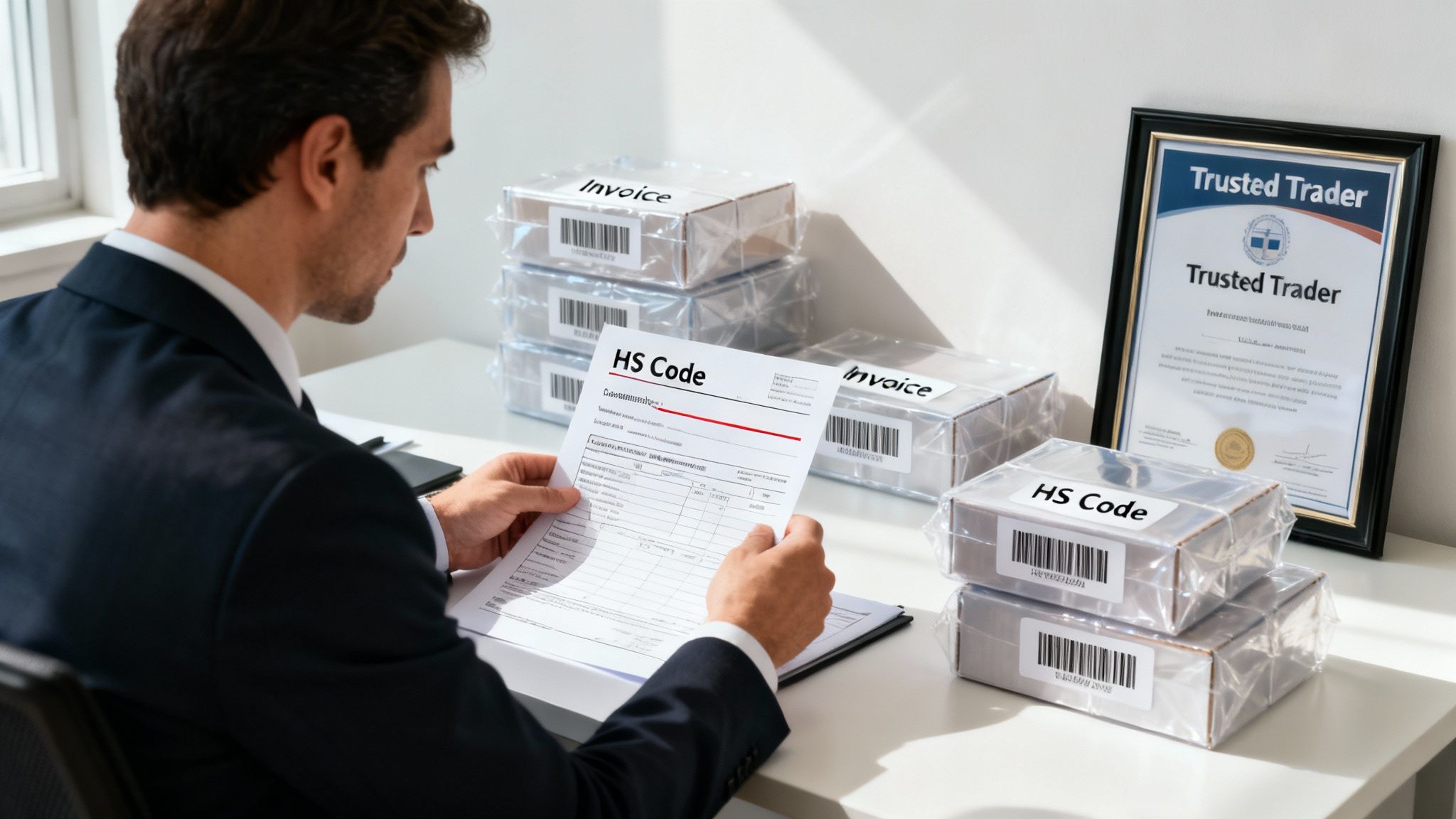
Master Your Paperwork with Precision
Sloppy paperwork is the number one cause of customs headaches, plain and simple. Your commercial invoice, packing list, and bill of lading should tell a perfectly consistent and detailed story. Vague descriptions like "electronics" are an open invitation for a closer look.
Be obsessively specific. Instead of just "machine parts," declare "500 units of stainless steel hex bolts, M8 x 1.25, for automotive assembly." This level of detail removes all doubt and shows the CBSA you’re a professional who knows their product inside and out.
Partner with a Diligent Customs Broker
Your customs broker is your first line of defence at the border. A great broker does more than just file paperwork; they act as your compliance partner, double-checking your documents for red flags and ensuring every detail is correct before it ever reaches the CBSA.
They are your guide through the maze of customs regulations. If you're unsure about the difference a good partner makes, you can explore the role and benefits of using a customs broker to see how they protect your interests. A proactive broker who treats your compliance as their own is an invaluable asset.
Become a Trusted Trader
If you want to move to the front of the line, joining a Trusted Trader program is the way to go. In Canada, the Partners in Protection (PIP) program is a voluntary CBSA initiative that certifies businesses with strong, secure supply chain practices.
Being a PIP-approved importer signals to the CBSA that you are a low-risk partner. This doesn't grant you immunity from inspection, but it significantly reduces the odds, leading to faster and more predictable border crossings.
The benefits are substantial. Trusted Trader programs are a cornerstone of modern trade security, and their members have a track record of near-perfect compliance, which drastically lowers their examination frequency compared to regular traders.
Improve Your Packaging and Labelling
How your goods are presented really matters. Clear, organized packaging and accurate labelling can make a CBSA officer’s job easier, which is always a good thing. Ensure every carton is clearly marked with its contents, quantities, and country of origin.
If you have multiple products in one shipment, create a detailed packing list that maps out exactly which items are in which box. This transparency makes it simple for an officer to verify your declaration quickly if they do a spot-check, potentially avoiding a full destuffing of the container.
Maintain Flawless CARM Compliance
The CBSA Assessment and Revenue Management (CARM) portal is now central to importing into Canada. Keeping your business information, licenses, and permits perfectly up-to-date in your CARM account is non-negotiable.
An outdated address or an incorrect business number can create compliance gaps that flag your account for review. That kind of attention is the last thing you want, as it could lead to increased scrutiny on all your future shipments.
Frequently Asked Questions About Customs Examinations
We get it—navigating the world of customs can feel like learning a new language. To clear things up, here are some straight answers to the questions we hear most often about customs examinations.
If My Shipment Is Selected, Does That Mean I Did Something Wrong?
Not necessarily. While mistakes in your paperwork are a common reason for a flag, the CBSA also uses a random selection process as part of its day-to-day security protocol. Your shipment could just be part of a routine spot-check, so there's no need to panic right away.
That said, if your shipments are being flagged over and over again, it’s a big hint. It's time to sit down with your customs broker and do a deep dive into your documentation and compliance practices to figure out what's going on.
Who Pays for the Costs of a Customs Examination?
The importer of record is responsible for 100% of the costs. This isn't just one fee; it covers everything associated with the exam. Think transport to and from the examination facility, labour for unloading and reloading the container, and any warehouse storage charges that rack up.
These expenses are completely separate from your regular duties and taxes. They're an additional cost you'll need to factor in.
Can My Customs Broker Speed Up the Process?
A broker can't make the CBSA officers move faster during the physical inspection, but a great one is absolutely essential for preventing extra delays. They’re the ones making sure all the right documents are submitted the second they're requested and keeping the lines of communication open with both the CBSA and the warehouse.
This behind-the-scenes management is what gets your goods released as quickly as possible once the inspection is finally done. Without it, things can really drag on.
How Long Can the CBSA Hold My Goods?
Legally, there's no maximum time limit. Most exams wrap up within a few business days, but some can take much longer. If you’re dealing with a complex case involving valuation disputes, intellectual property rights, or requirements from another government department, be prepared for a longer hold.
Your best defence against a lengthy delay is crystal-clear documentation and a broker who is on top of every detail.
Navigating a customs examination takes experience and a proactive game plan. The team at J.W. Smith Customs Brokers Ltd. has over 50 years of experience helping importers like you clear goods with confidence and minimal delays. Let us handle the complexities so you can focus on your business. Contact us today for a consultation.
Need Help with Customs?
J.W. Smith Customs Brokers has over 50 years of experience helping Canadian businesses navigate imports with confidence. Our team of licensed customs brokers is ready to assist with your import and export needs.